
How I Came to Hit Myself in the Face With a Crowbar
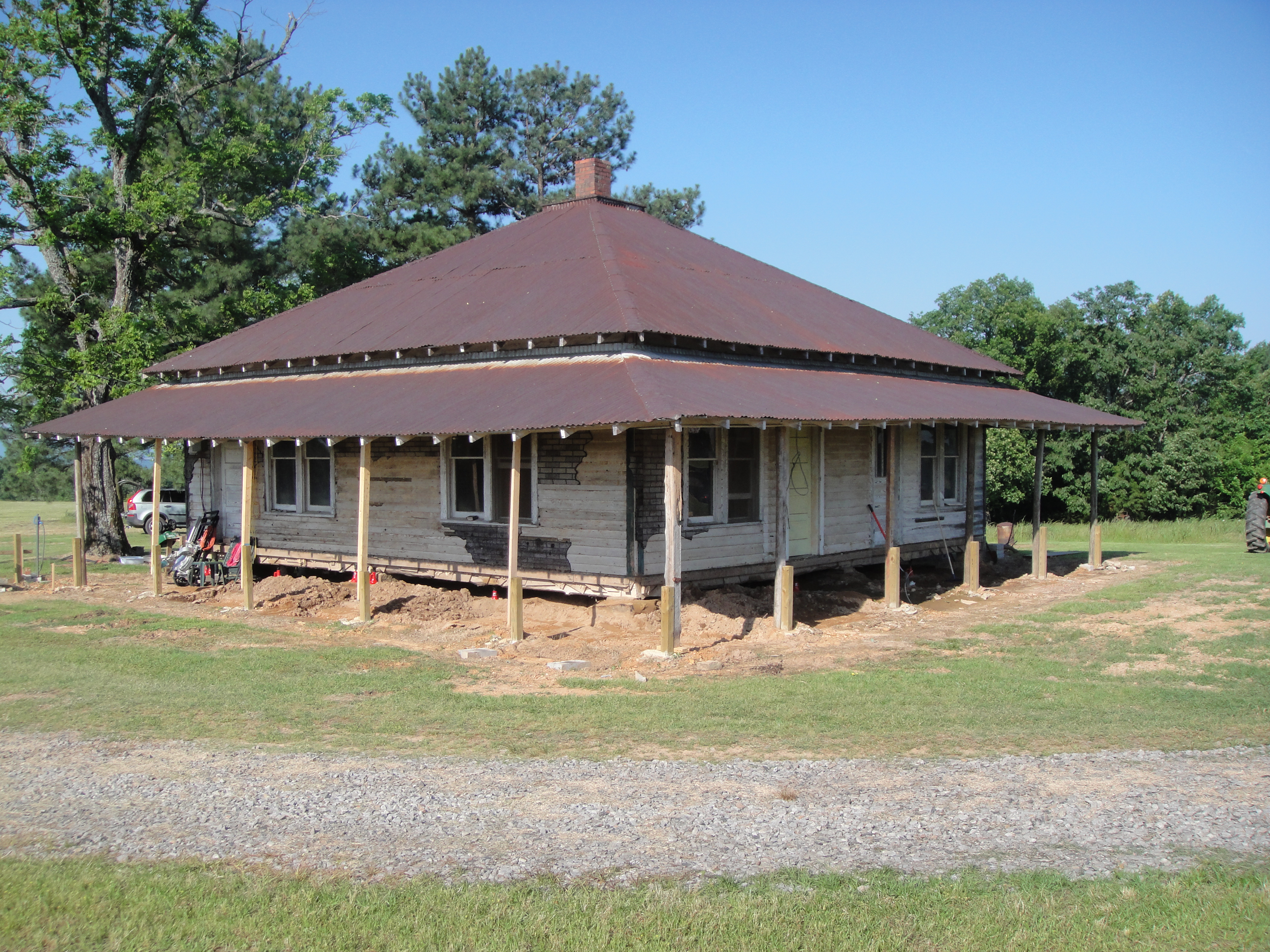
A long, long time ago, someone decided that asphalt shingles were such a great idea that they would invent a product that allowed people to encase their entire house in asphalt shingles! I kid you not. Imprinted to look like bricks and sold in two by four foot sheets, asphalt siding was a popular product when it was first introduced during the Great Depression (Never Paint Again!) and remained available until about 1950. Jane Doe was covered with the stuff when we started our project. Installed at least 70 years ago, it did an admirable job of protecting the original clapboard underneath, but at an ugly price. It was decayed, looked abysmal and had to go before our renovation project could proceed.
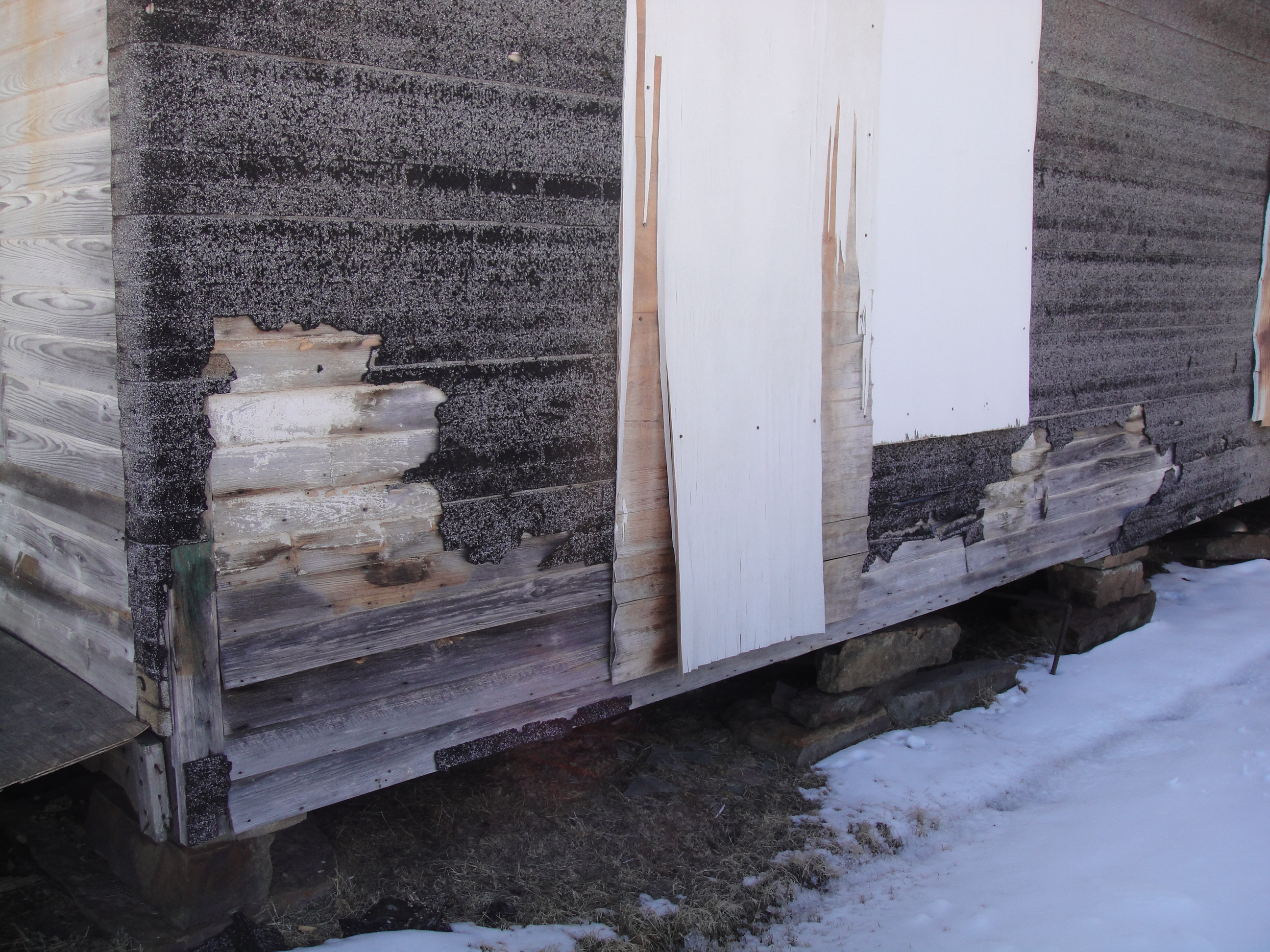
What were they thinking?
The summer of 2011 held Arkansas in its thrall with a record heat wave. Removal of the siding was a mindless task, but critical. It could be done alone and I liked to work on it by myself in the brief cool of the morning. All it required was a crow bar, an old coffee can for the pulled nails and occasionally a ladder for the upper reaches of the house.
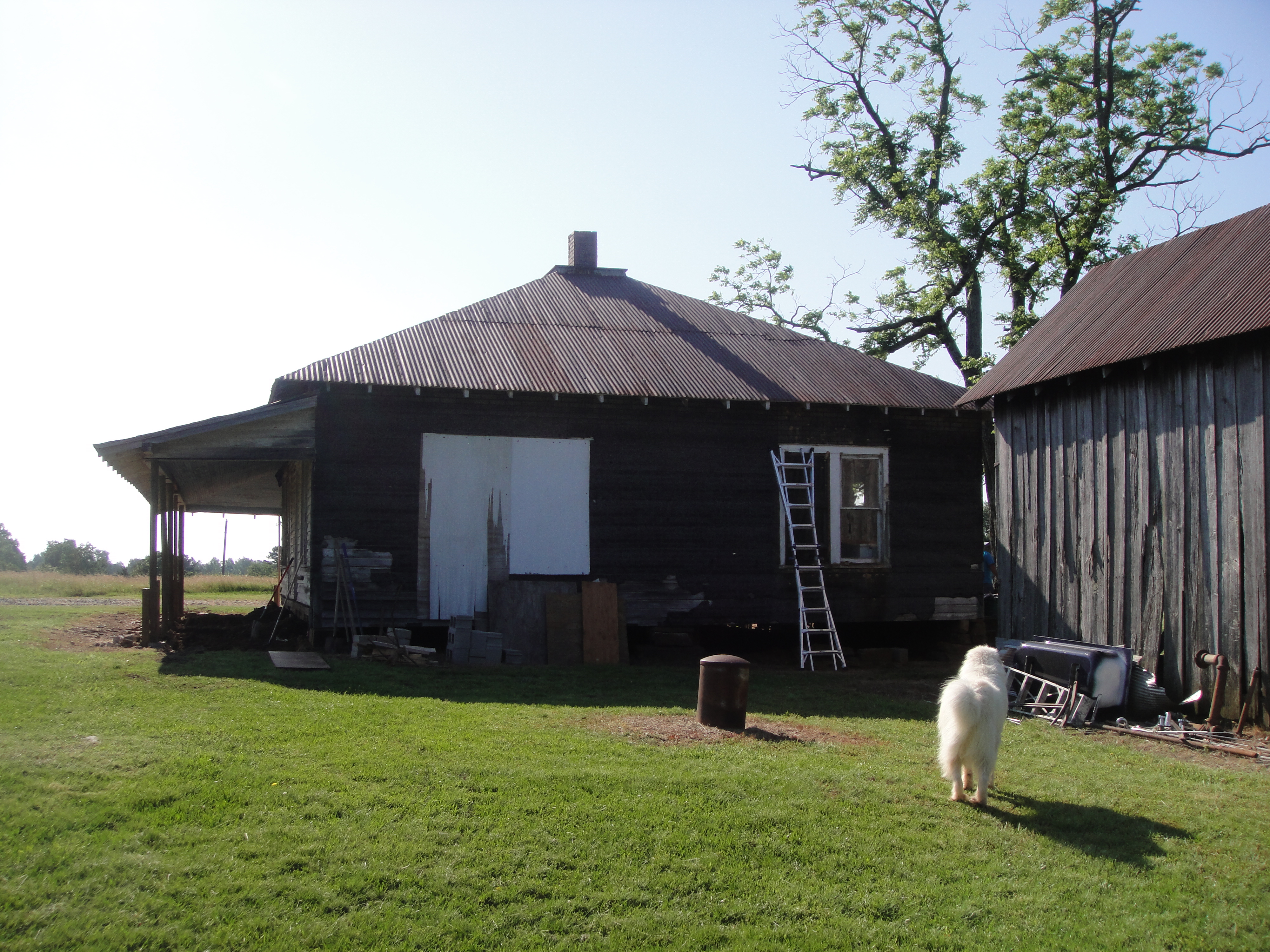
The Bad Girl comes by to check things out.
I also donned a pair of work gloves and slipped a claw hammer into my tool belt in case of stubborn nails (which I soon found out, would be all the nails). Each two by four foot asphalt sheet was held in place by about a hundred rusty nails and all I had to do was pry each nail out, one by one. It was, without a doubt, one of the slowest, dirtiest jobs I have ever tackled.
The ancient siding was crumbly and fragile, so brittle that when I wedged the crow bar underneath to pry out a nail, the siding would often just disintegrate, leaving the nail in place. And the little gravelly bits that typically coat a shingle? They were sifting off the house by the bucketful, covering the ground below with a dusting of gray sand; that is, whatever grit didn’t stick to me first.
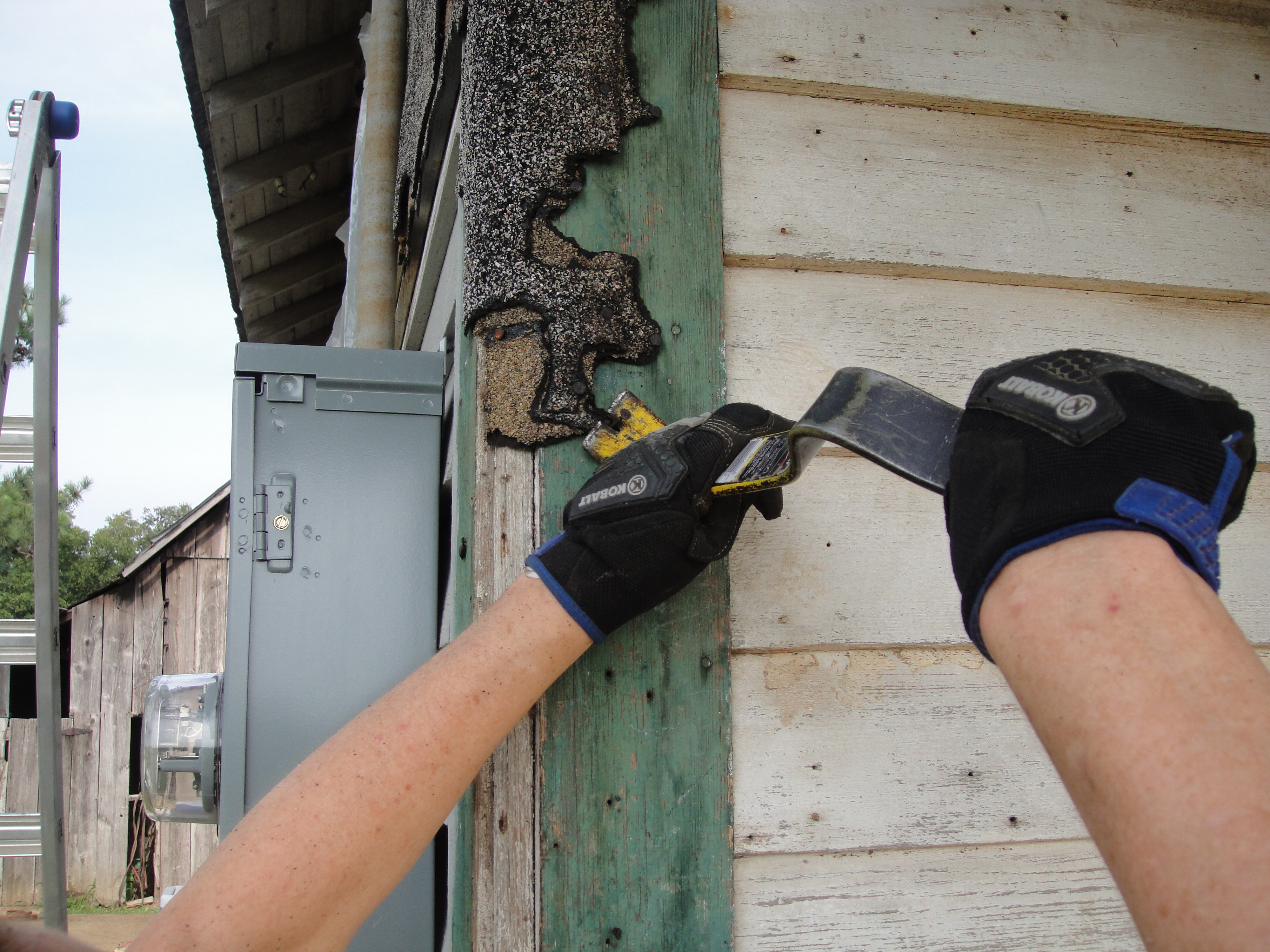
Gloves and a crowbar, all it takes!
But the worst part of the wrenching and tugging were the mud daubers–they loved building their little mud huts between the clapboards and asphalt shingles. Every time I wrenched a rusty nail and a rotten piece of asphalt away from the house there would be at least two or three dun colored tubes crumbling onto my gloved hand.
Those ubiquitous mud daubers, how do I even begin to explain them? The old farmhouse was their teeming metropolis. The daubers had staked their claim long ago, planted their muddy little flag. They had gone forth and multiplied–and come back and multiplied. If mud daubers had an India, this was their Mumbai. If the house burned to the ground, an adobe replica would stand in its place; so prolific were their nests. And along with my sweat and the grit from the siding, the powdery dust from their grimy love shacks powdered my arms and legs as I jerked and yanked on each corroded nail.
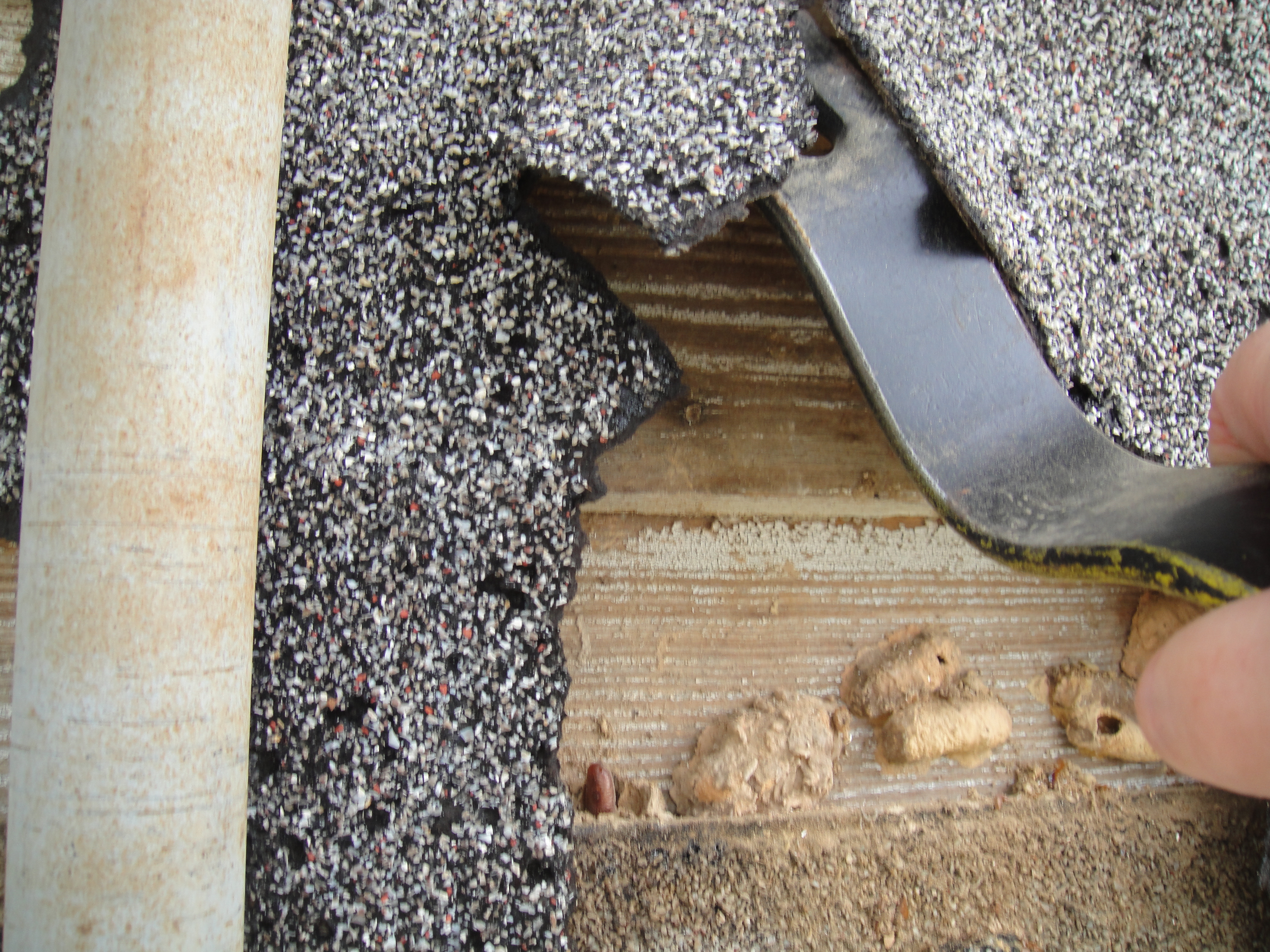
Pretty disgusting, not gonna lie.
At first I approached each shingle with trepidation, fearing some sort of hornet-esque retribution. But soon the stifling heat and filth muted my fear of wasps. How dirty was I? Dirty enough that when I straightened my arms there were black creases in the crooks of my elbows. Dirty enough that when I took my shoes off I looked like I had a tan line at my ankle. Dirty enough that by noon I had an accumulation of gray asphalt grit chafing in my bra. Dirty enough that when I wiped the back of my hand across my forehead it felt like damp sand paper. Dirty enough that at the end of the day all in the world I wanted was a shower, and I wanted it really, really bad, but more about that later.
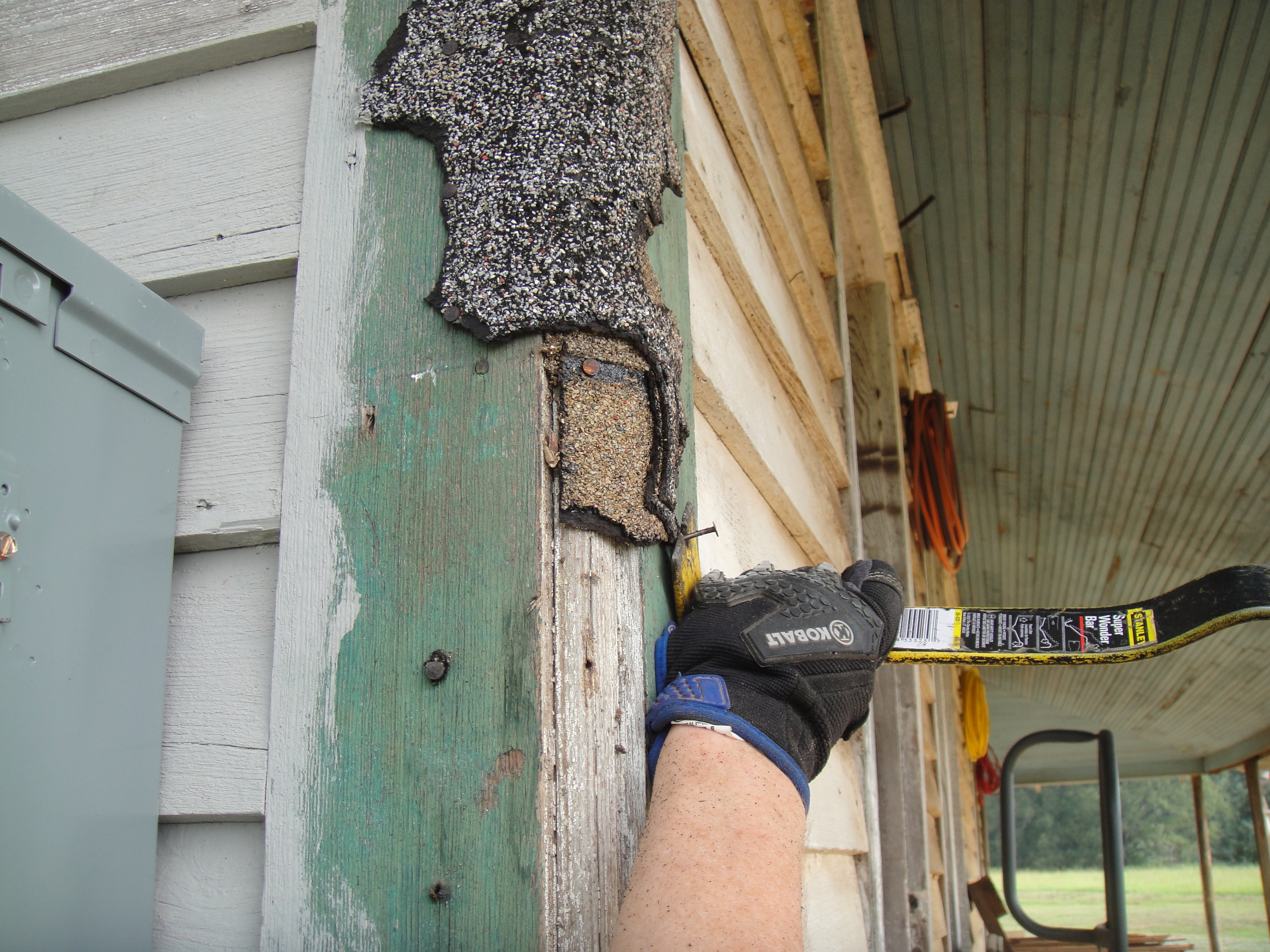
One nail at a time.
It was in this disheveled state that I found myself ten feet in the air, at the top of an aluminum extension ladder, straining on my tiptoes to reach the farthest nail holding the last asphalt sheet tacked up under the eaves. My right hand ached as it stretched out as far as possible grasping the crowbar while my left hand white-knuckled the ladder. From under the eave, an angry mud dauber flew directly at my face.
At. My. Face.
My eyes crossed and I was forced into a split-second decision. If I let go of the ladder to swat at the wasp, I risked bodily harm from a ten-foot fall. PROTECT YOUR FACE, my mind screamed. If I used my right–well, WHAM, too late. Suffice it to say that a crow bar to the face feels a lot like you think it would. Solid. Metallic. Painful. I bloodied my lip and made it down the ladder in what must have been world record time.
But I have to say I am now a firm believer in aversion therapy. The swarms of winged avengers don’t faze me nearly as much as they did before our aerial confrontation. I’m the squatter now, the interloper, the flag-planter–one homesteadin’ bad-ass bitch. I’m an Oklahoman, after all. My great-grandfather was in the land run, for God’s sakes. We know a thing or two about claim jumping; it’s in our blood. Move over, you little red-winged piss-ants, there’s a new sheriff in town. She’s got a scar on her lip, grit in her bra and a can of Raid aerosol in her holster.
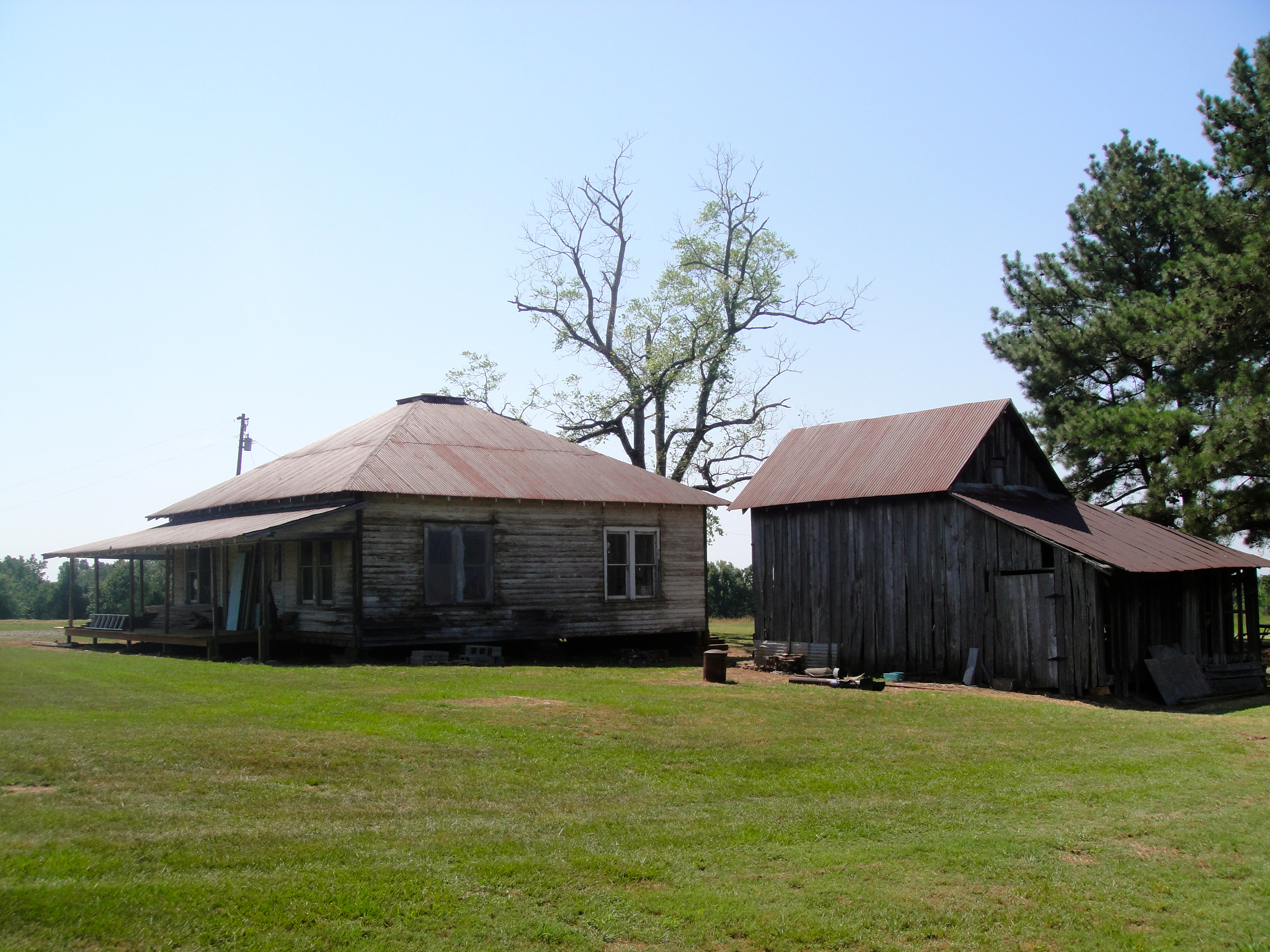
Mission accomplished, although wounded in action.



 natural state of insanity