Skip to content

Posts from the ‘deer camp’ Category

How I Came to Hit Myself in the Face With a Crowbar

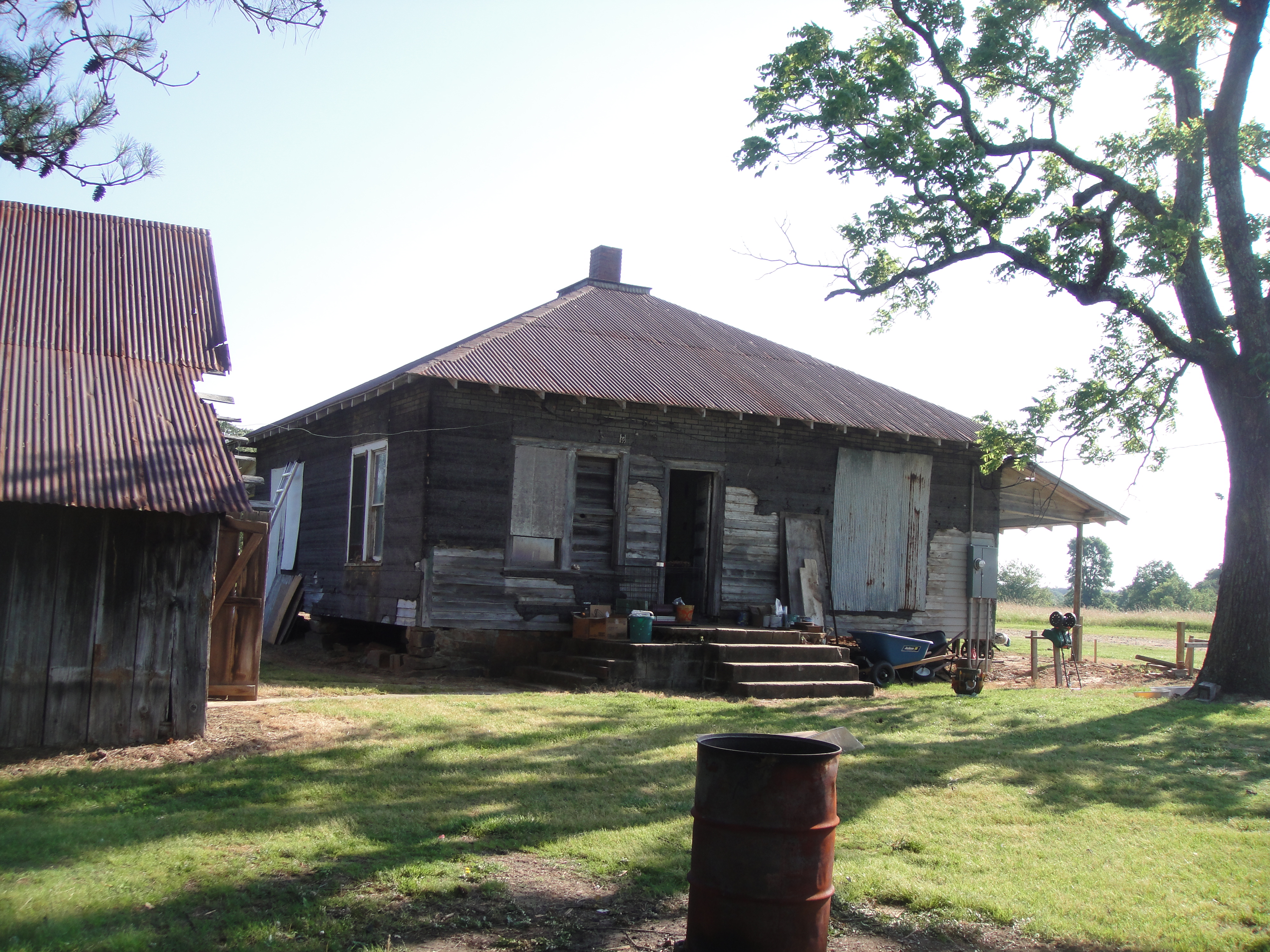
A long, long time ago, someone decided that asphalt shingles were such a great idea that they would invent a product that allowed people to encase their entire house in asphalt shingles! I kid you not. Imprinted to look like bricks and sold in two by four foot sheets, asphalt siding was a popular product when it was first introduced during the Great Depression (Never Paint Again!) and remained available until about 1950. Jane Doe was covered with the stuff when we started our project. Installed at least 70 years ago, it did an admirable job of protecting the original clapboard underneath, but at an ugly price. It was decayed, looked abysmal and had to go before our renovation project could proceed.
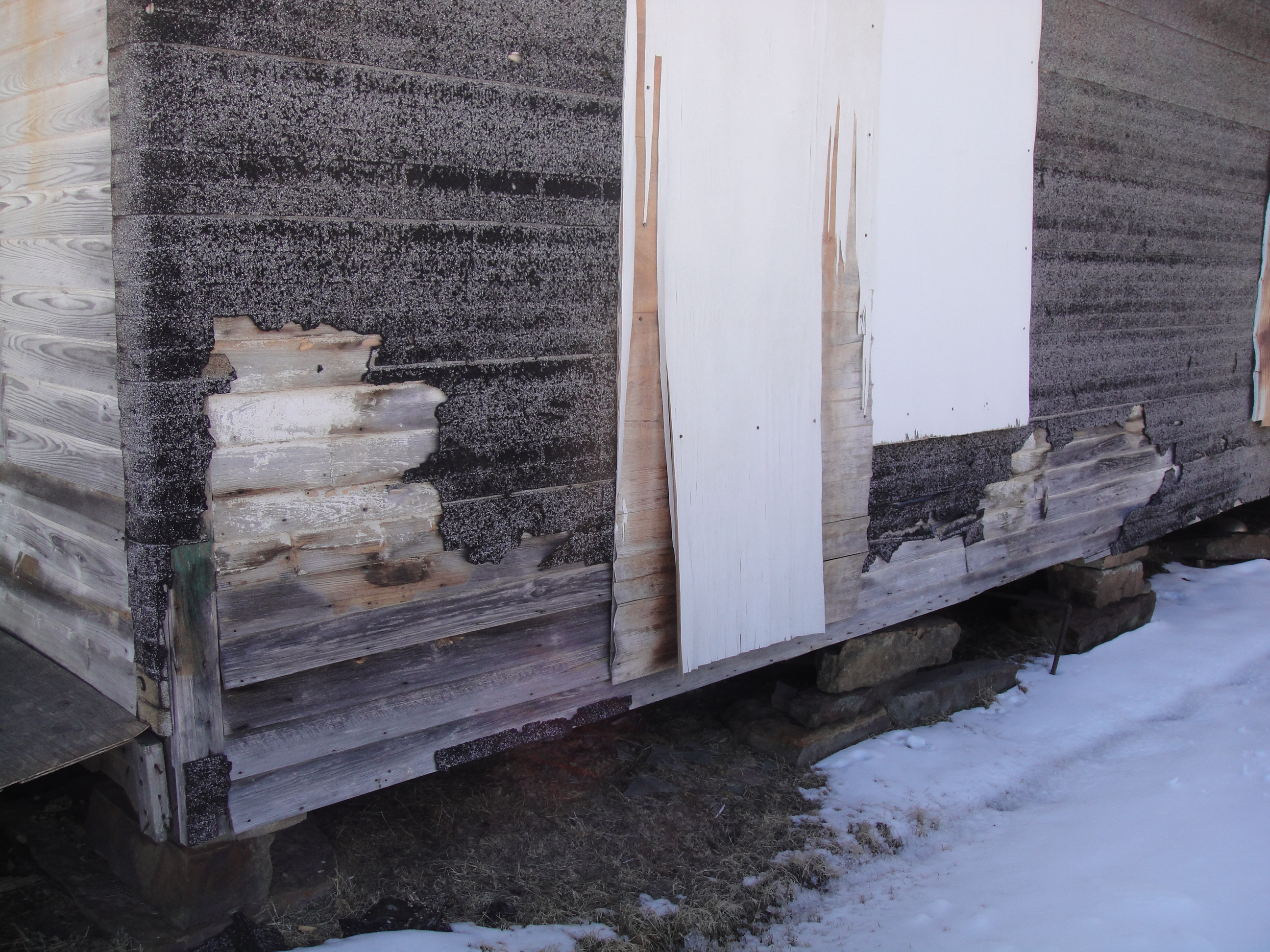
What were they thinking?

The summer of 2011 held Arkansas in its thrall with a record heat wave. Removal of the siding was a mindless task, but critical. It could be done alone and I liked to work on it by myself in the brief cool of the morning. All it required was a crow bar, an old coffee can for the pulled nails and occasionally a ladder for the upper reaches of the house.
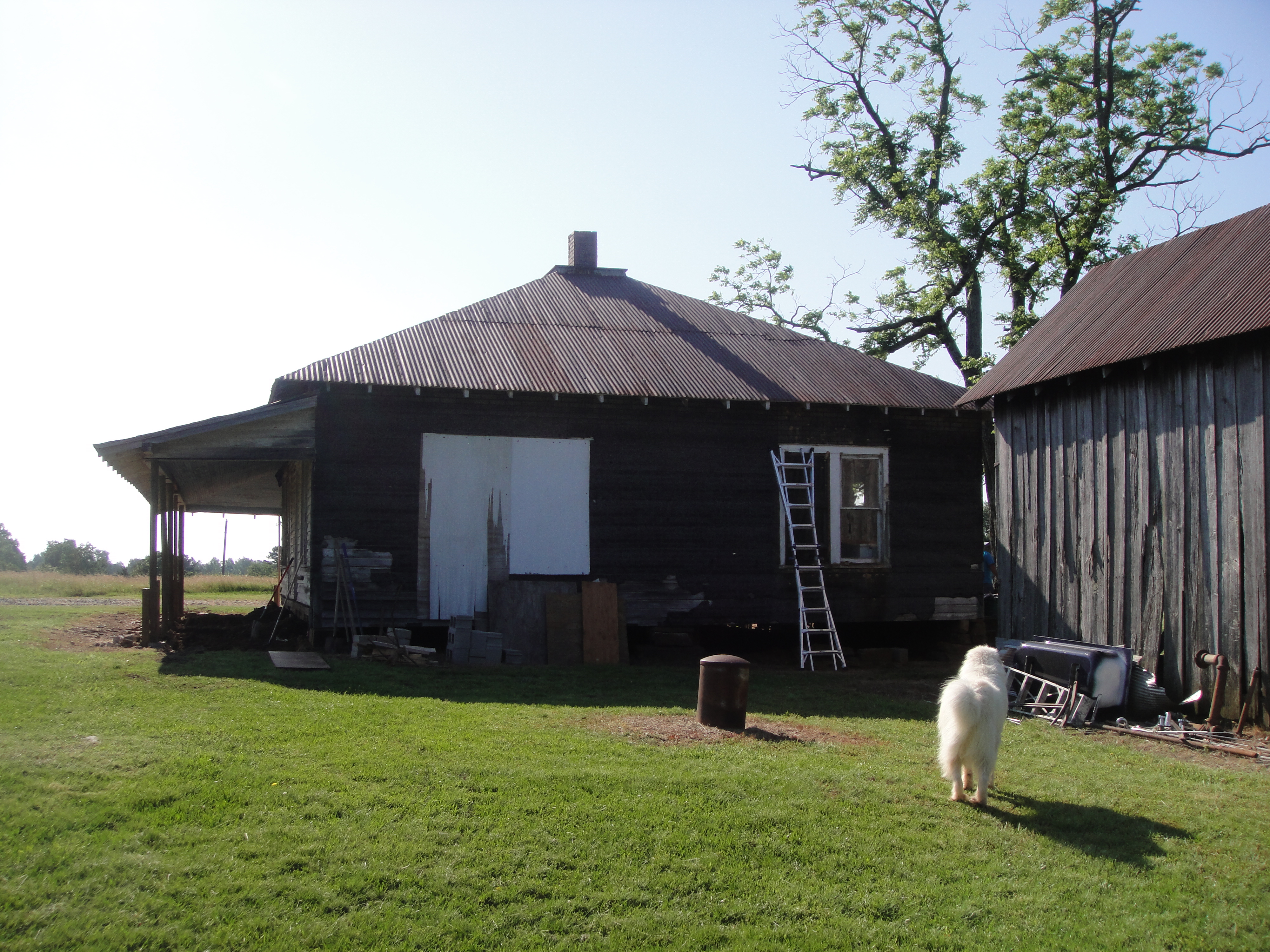
The Bad Girl comes by to check things out.

I also donned a pair of work gloves and slipped a claw hammer into my tool belt in case of stubborn nails (which I soon found out, would be all the nails). Each two by four foot asphalt sheet was held in place by about a hundred rusty nails and all I had to do was pry each nail out, one by one. It was, without a doubt, one of the slowest, dirtiest jobs I have ever tackled.

The ancient siding was crumbly and fragile, so brittle that when I wedged the crow bar underneath to pry out a nail, the siding would often just disintegrate, leaving the nail in place. And the little gravelly bits that typically coat a shingle? They were sifting off the house by the bucketful, covering the ground below with a dusting of gray sand; that is, whatever grit didn’t stick to me first.
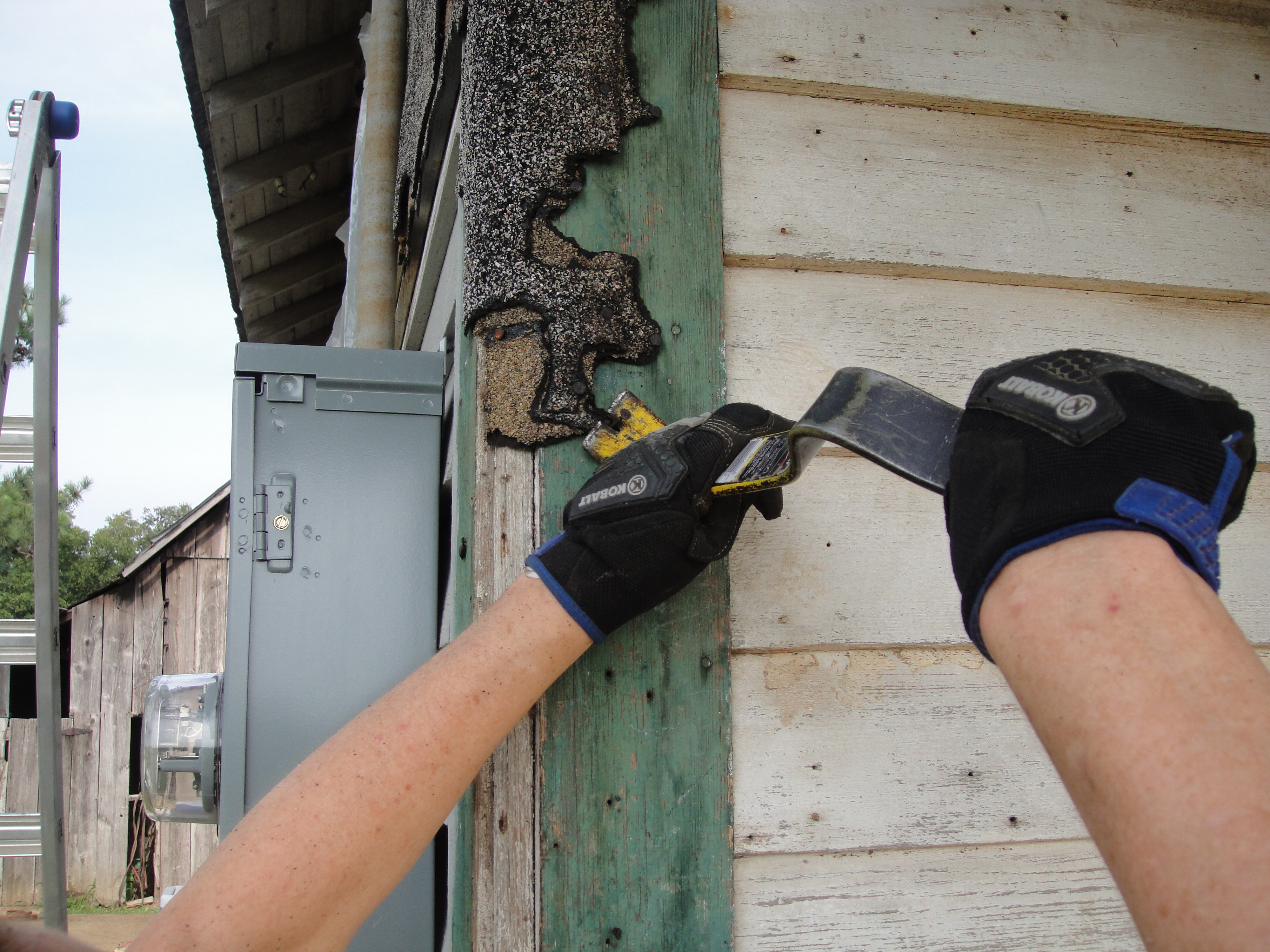
Gloves and a crowbar, all it takes!

But the worst part of the wrenching and tugging were the mud daubers–they loved building their little mud huts between the clapboards and asphalt shingles. Every time I wrenched a rusty nail and a rotten piece of asphalt away from the house there would be at least two or three dun colored tubes crumbling onto my gloved hand.

Those ubiquitous mud daubers, how do I even begin to explain them? The old farmhouse was their teeming metropolis. The daubers had staked their claim long ago, planted their muddy little flag. They had gone forth and multiplied–and come back and multiplied. If mud daubers had an India, this was their Mumbai. If the house burned to the ground, an adobe replica would stand in its place; so prolific were their nests. And along with my sweat and the grit from the siding, the powdery dust from their grimy love shacks powdered my arms and legs as I jerked and yanked on each corroded nail.
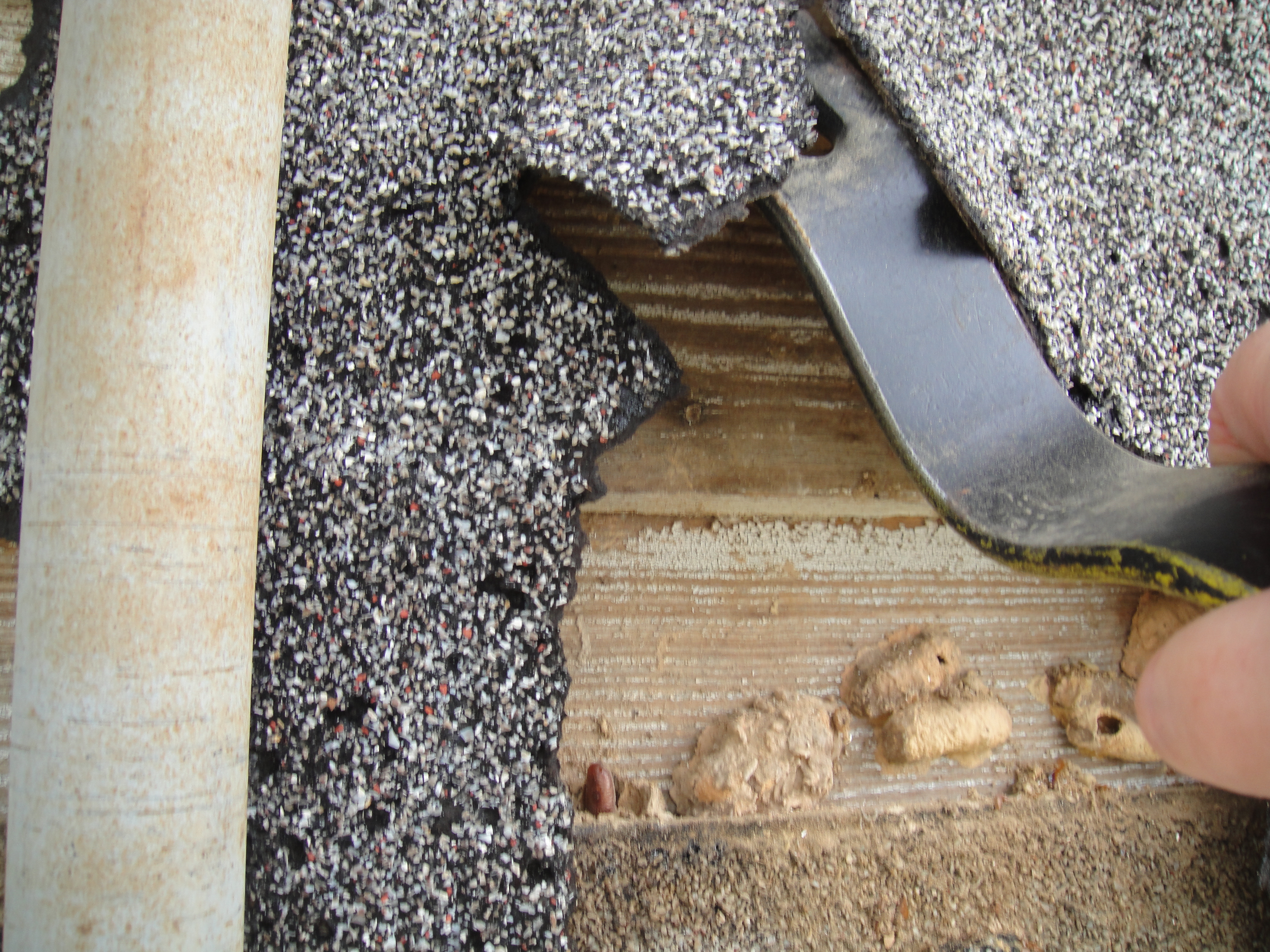
Pretty disgusting, not gonna lie.

At first I approached each shingle with trepidation, fearing some sort of hornet-esque retribution. But soon the stifling heat and filth muted my fear of wasps. How dirty was I? Dirty enough that when I straightened my arms there were black creases in the crooks of my elbows. Dirty enough that when I took my shoes off I looked like I had a tan line at my ankle. Dirty enough that by noon I had an accumulation of gray asphalt grit chafing in my bra. Dirty enough that when I wiped the back of my hand across my forehead it felt like damp sand paper. Dirty enough that at the end of the day all in the world I wanted was a shower, and I wanted it really, really bad, but more about that later.
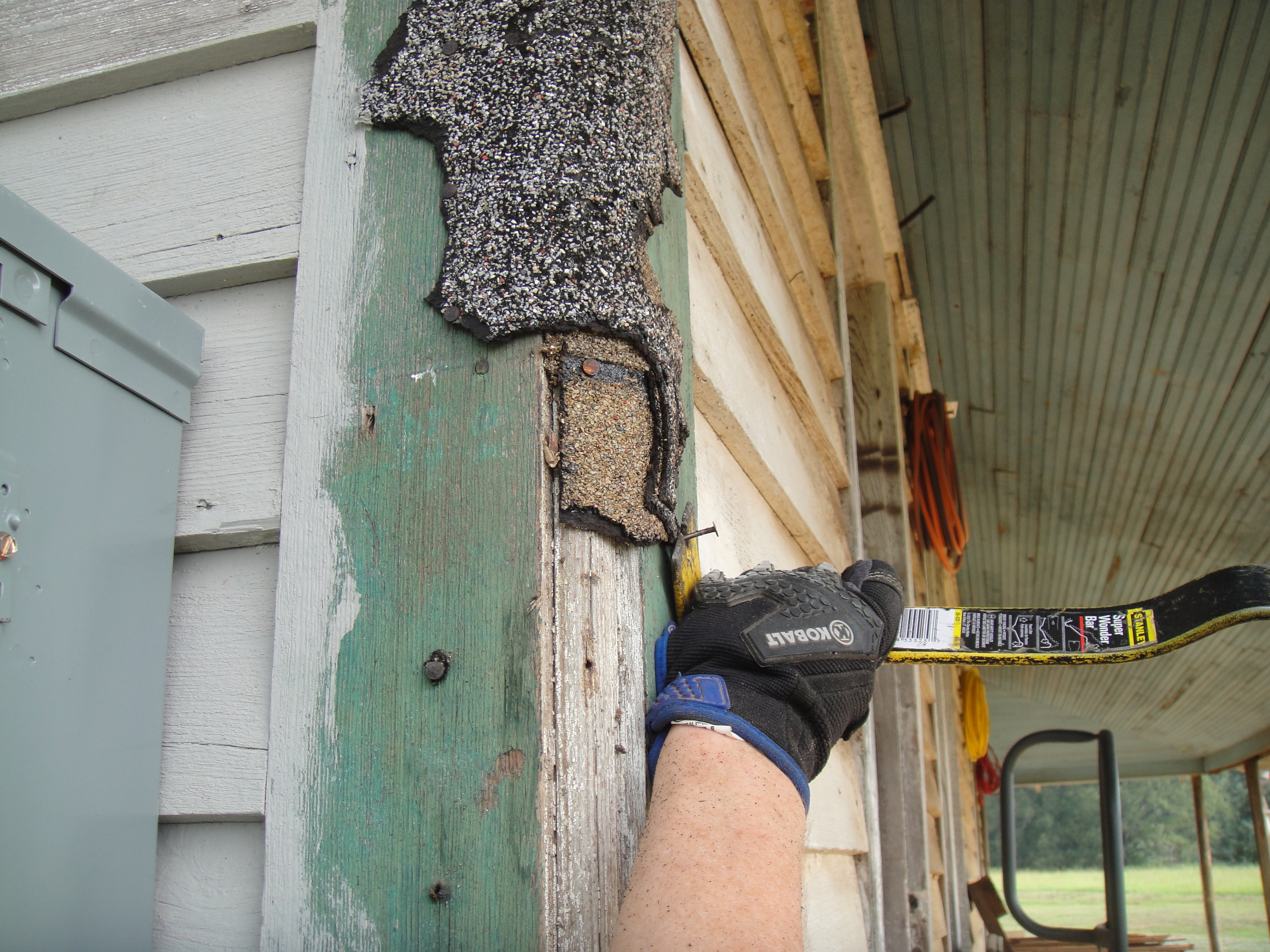
One nail at a time.

It was in this disheveled state that I found myself ten feet in the air, at the top of an aluminum extension ladder, straining on my tiptoes to reach the farthest nail holding the last asphalt sheet tacked up under the eaves. My right hand ached as it stretched out as far as possible grasping the crowbar while my left hand white-knuckled the ladder. From under the eave, an angry mud dauber flew directly at my face.

At. My. Face.

My eyes crossed and I was forced into a split-second decision. If I let go of the ladder to swat at the wasp, I risked bodily harm from a ten-foot fall. PROTECT YOUR FACE, my mind screamed. If I used my right–well, WHAM, too late. Suffice it to say that a crow bar to the face feels a lot like you think it would. Solid. Metallic. Painful. I bloodied my lip and made it down the ladder in what must have been world record time.

But I have to say I am now a firm believer in aversion therapy. The swarms of winged avengers don’t faze me nearly as much as they did before our aerial confrontation. I’m the squatter now, the interloper, the flag-planter–one homesteadin’ bad-ass bitch. I’m an Oklahoman, after all. My great-grandfather was in the land run, for God’s sakes. We know a thing or two about claim jumping; it’s in our blood. Move over, you little red-winged piss-ants, there’s a new sheriff in town. She’s got a scar on her lip, grit in her bra and a can of Raid aerosol in her holster.
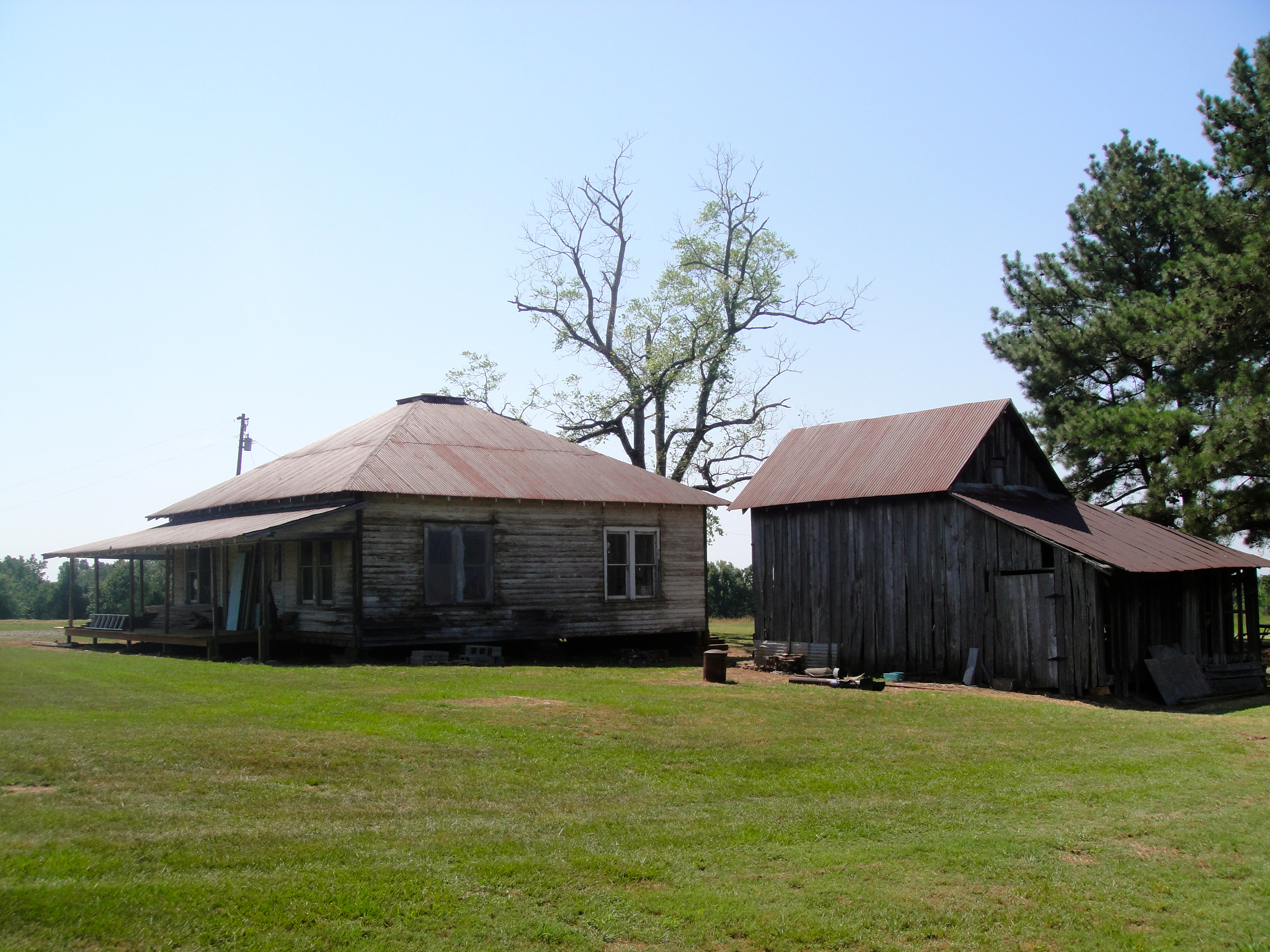
Mission accomplished, although wounded in action.
What’s a Farmhouse Without a Porch?

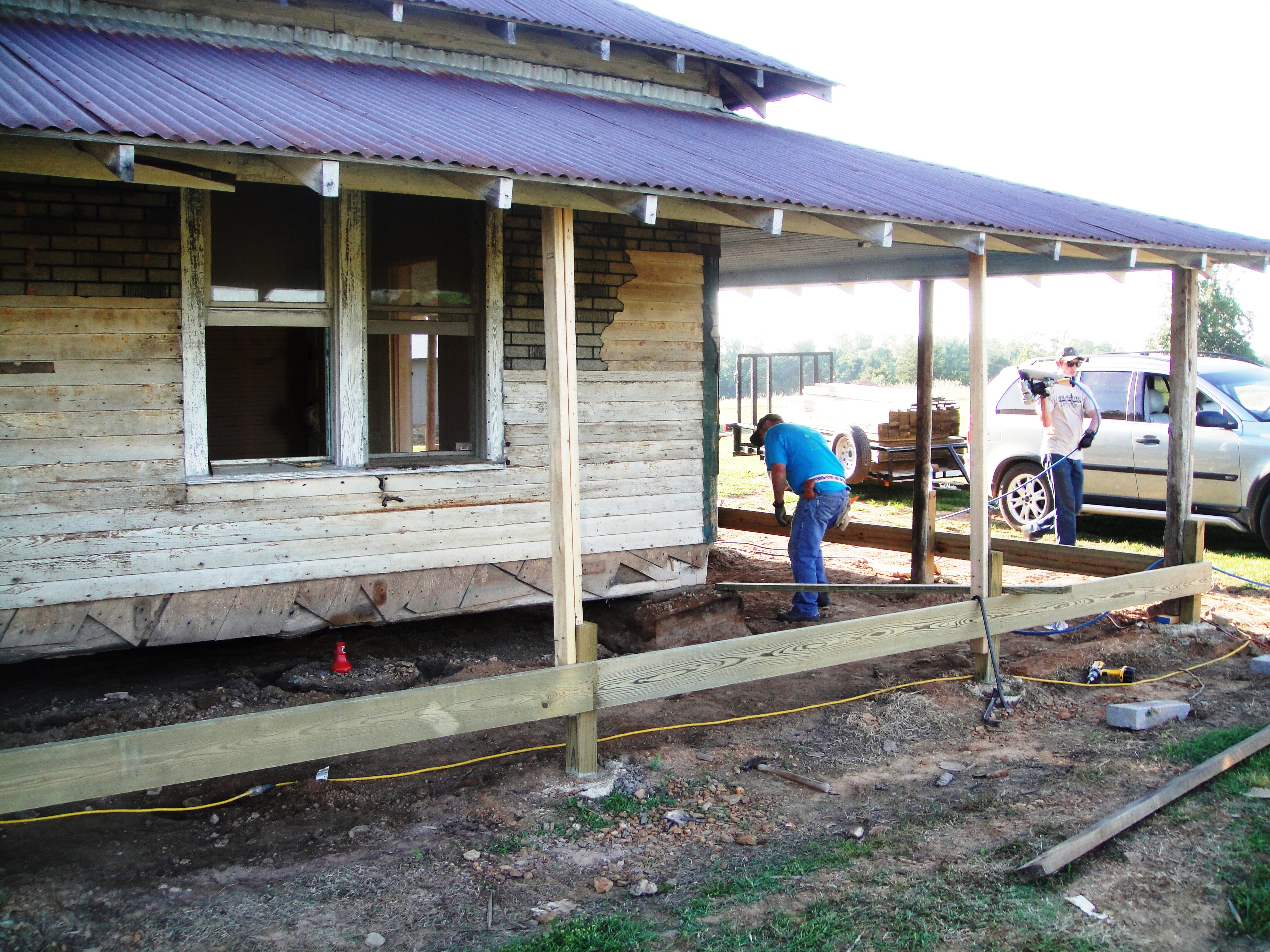
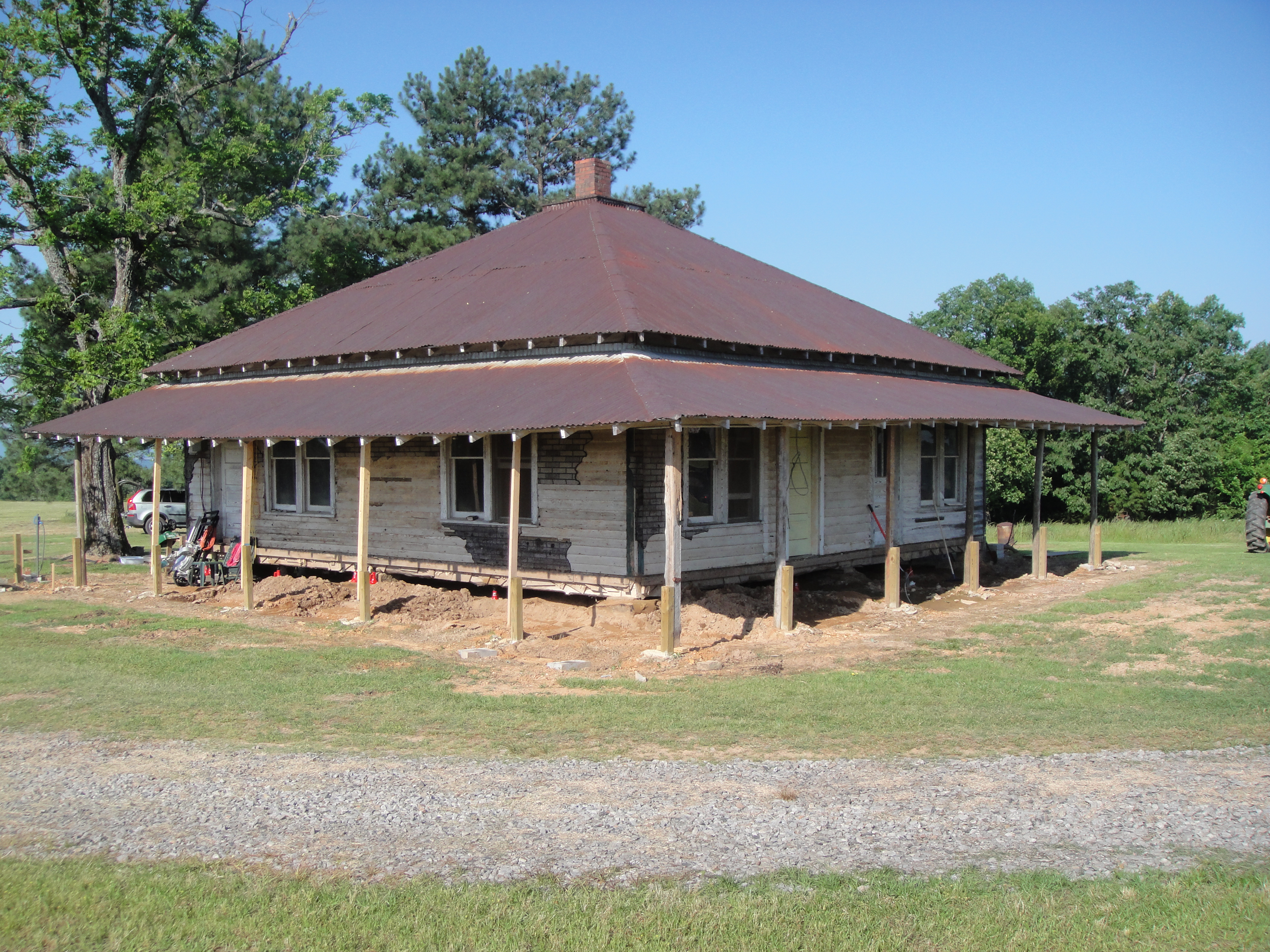
The first order of business was to rebuild the porch.  As soon as the last load was taken to the storage unit, we began the reconstruction, post haste. Princess Jasmine and the Cherokee Kid arrived, having just finished up their finals at the smaller of the two land grant universities in the great state of Oklahoma. May the Lord preserve my beloved Oklahoma State Cowboys from the slings and arrows of the Land Thieves in Norman and the Wild Pigs of Fayetteville! But I digress. With lumber, plywood and a nail gun we forge ahead!

Teacher, teacher, I declare!! I see Jane Doe’s underwear!

First, a little grading.

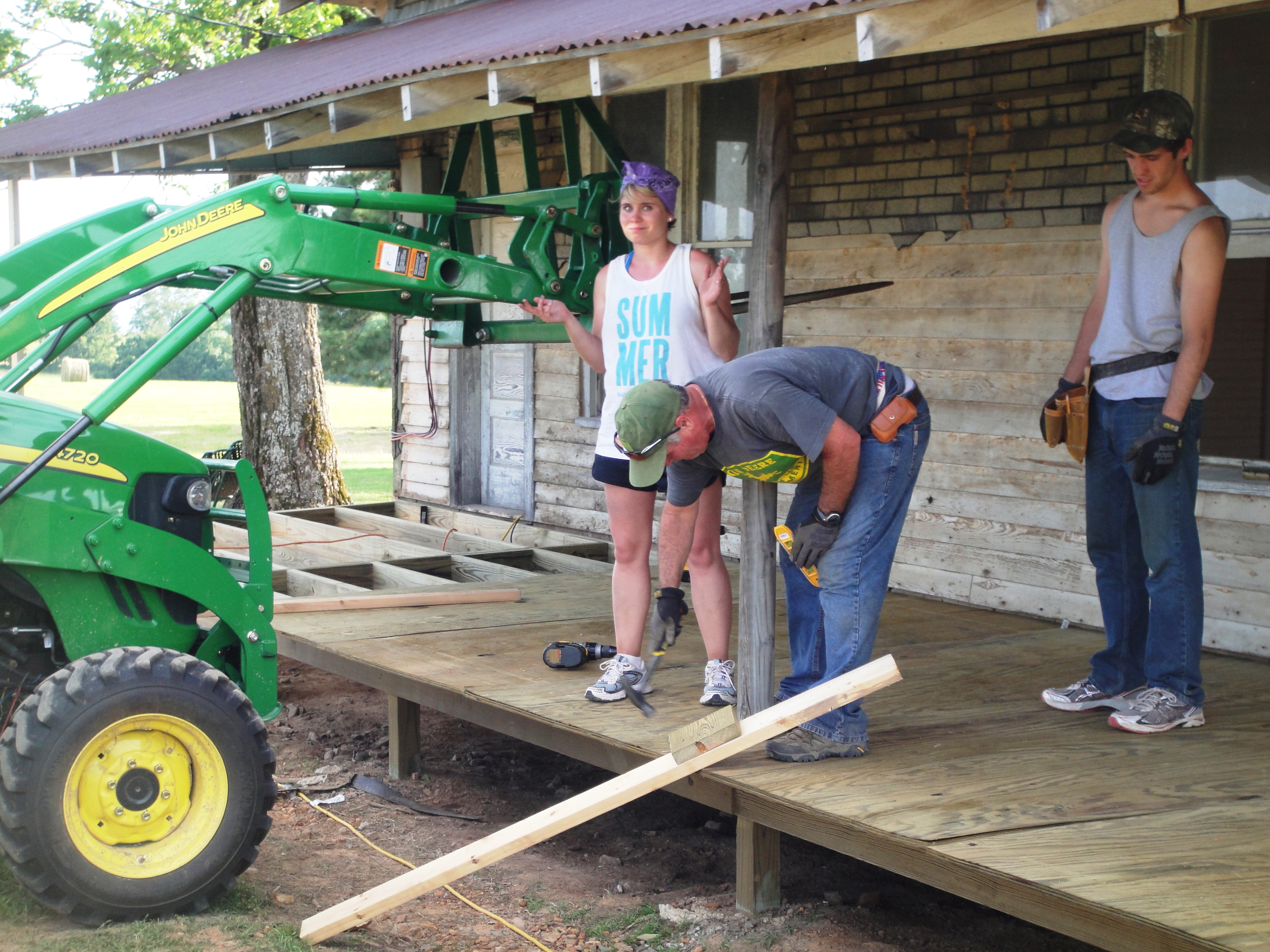
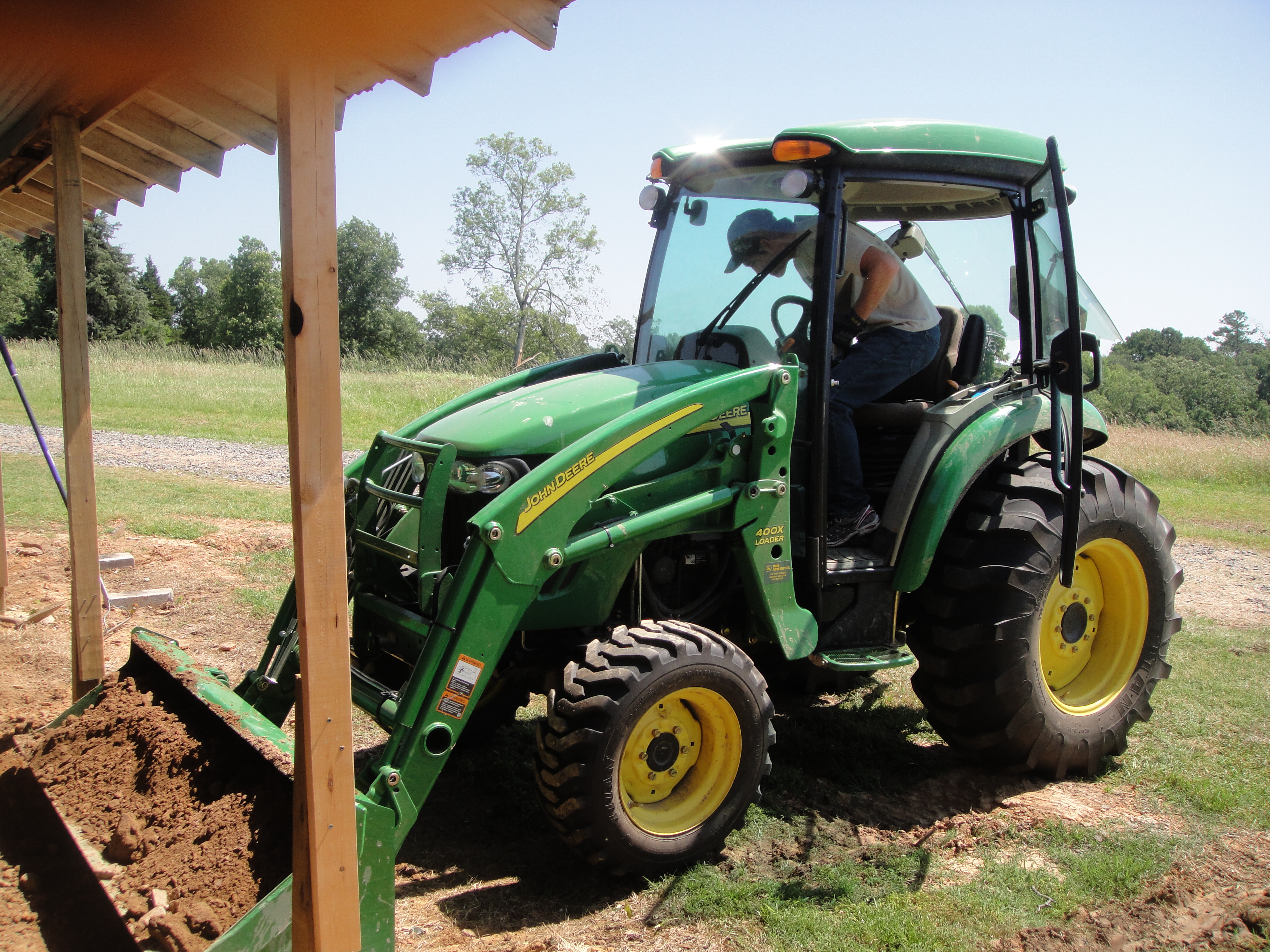
The Cherokee Kid does a little fine grading with the John Deere.

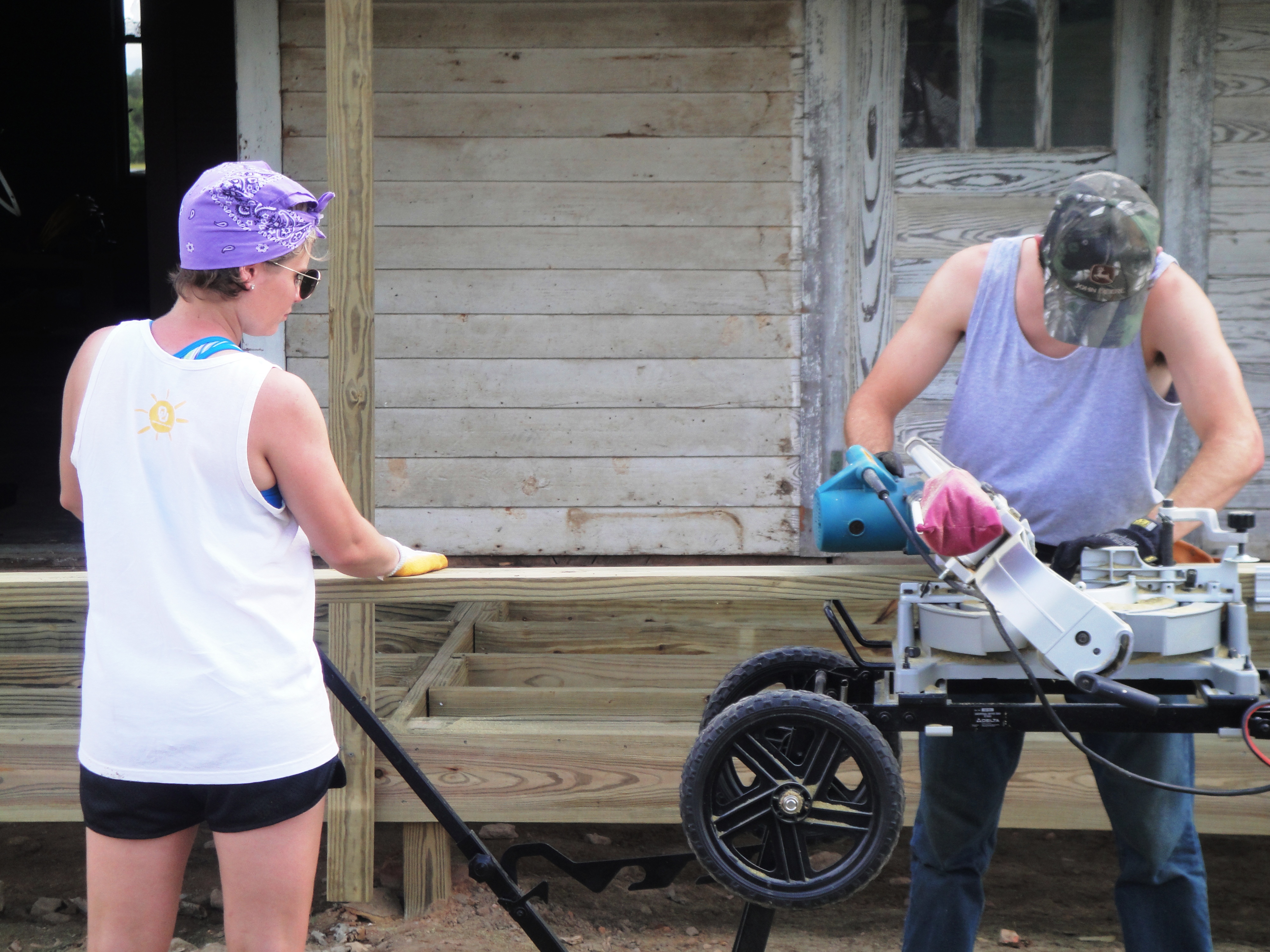
Then we fire up the saw.

Princess Jasmine and the Cherokee Kid man the saw.

By the end of the morning we had the porch framed in. The GWH thinks rebuilding the porch will stabilize the whole house.

The frame is almost done!

The most interesting part of the project came when we had to somehow slip the plywood deck under the temporary posts holding up the roof. I almost couldn’t watch:

Slipping the temporary posts in place while our friend, John Deere, holds up the porch roof.

So as the sun set on our first full work weekend, Jane had a new porch. We decided to wait until we were further along in the project to apply the permanent decking material, but for now, Jane was stabilized and we had a somewhat protected place to stack our building materials. Next up: interior demolition!

I think she’s starting to look a little happier, don’t you?

Moving Day!

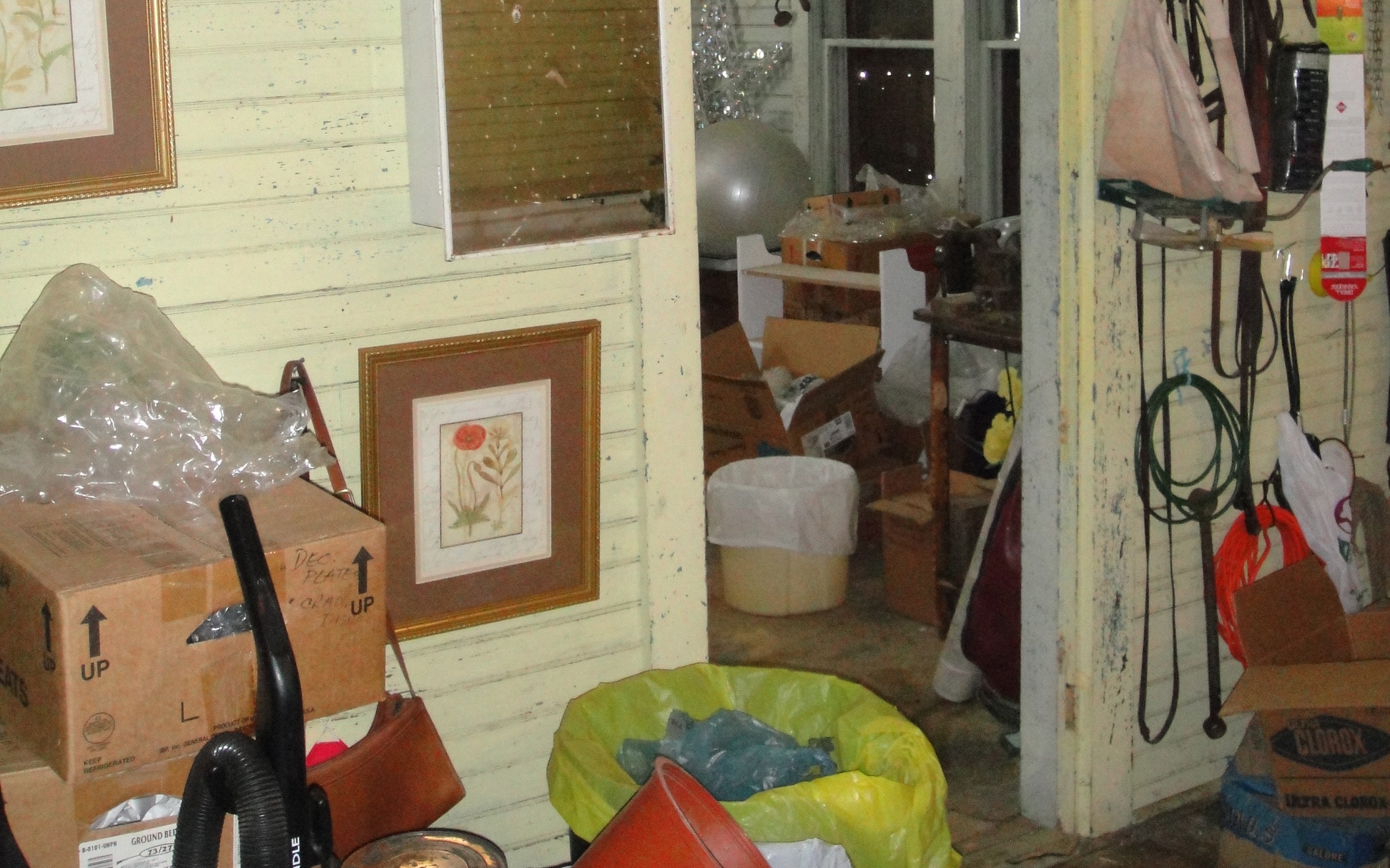
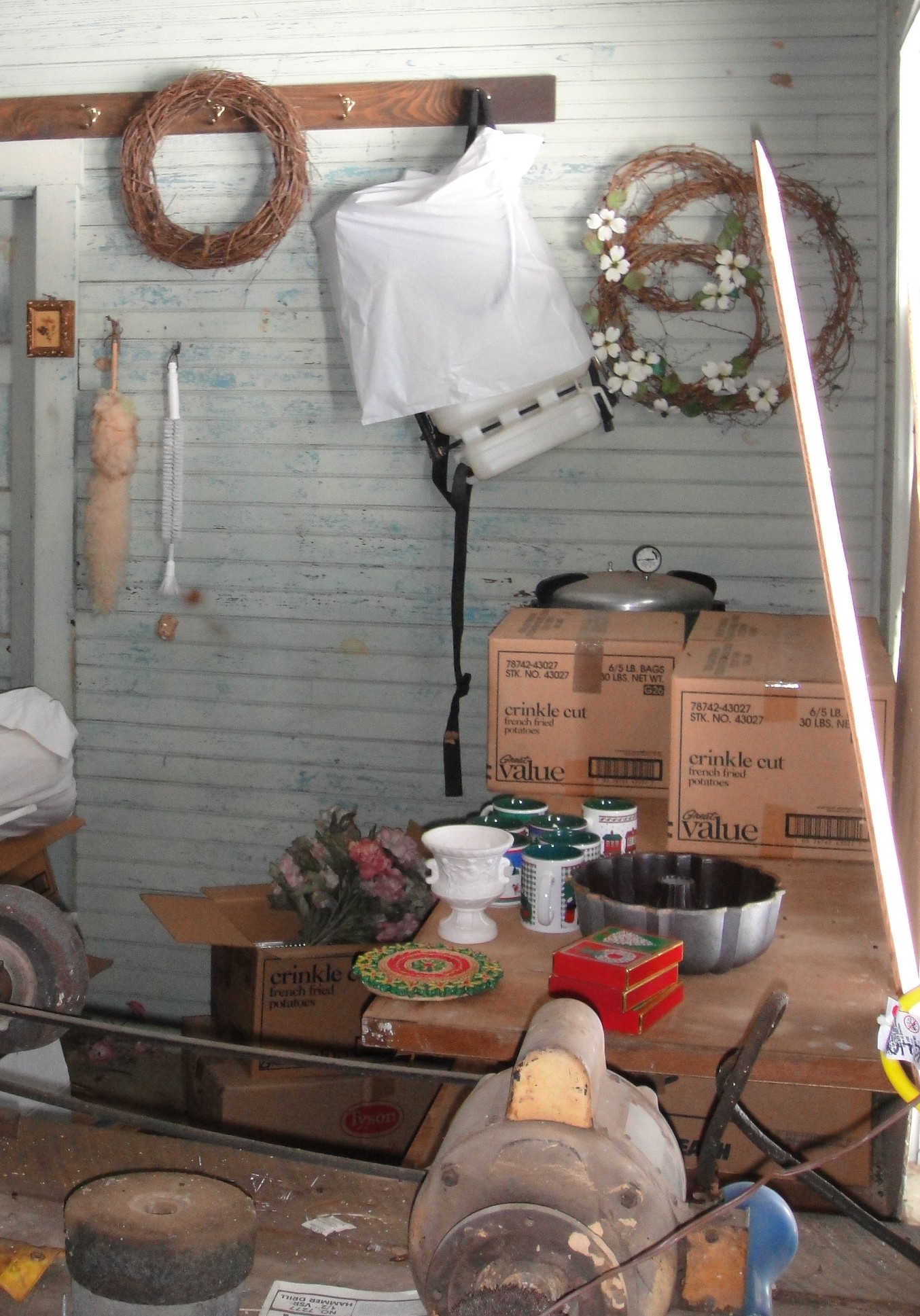
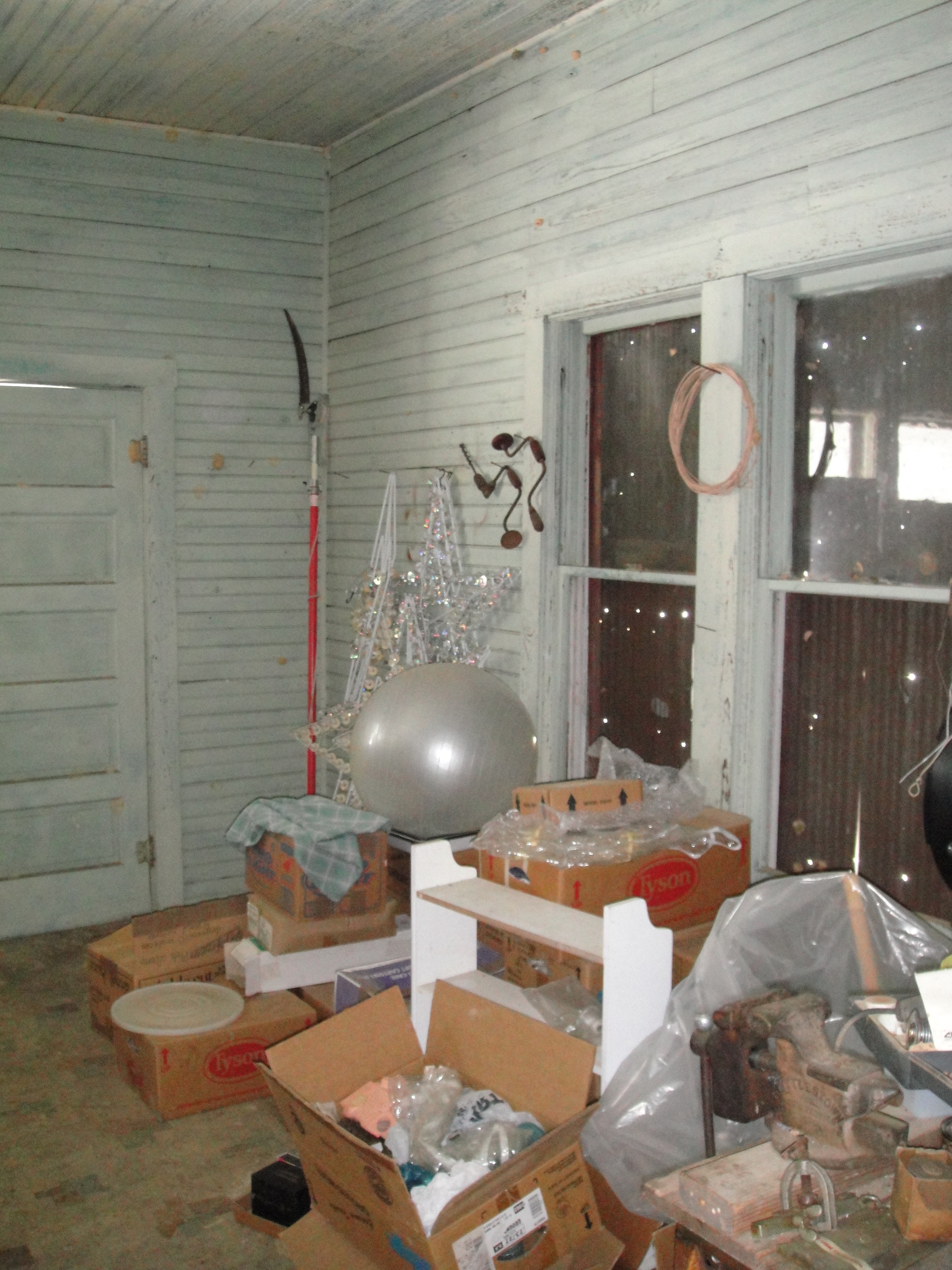
Memorial Day Weekend, that was our  self-designated “D-Day”. Princess Jasmine and the Cherokee Kid would be out of school,  GWH had a nice long weekend and had spent the last few weeks demolishing the porch and bathroom while at the same time preparing Mamaw, his mom, for the looming changes. Jane had been essentially a storage building since 1975.  What would you keep if you knew you could store it in a 900 sq. ft. storage unit? Exactly! Everything. Which brings me to this post’s main topic: Boxes, Pro and Con.

Where to start?

Mamaw had spent the last few weeks preparing for the big move. Her task was to organize everything in the house into three groups: those things she wanted to throw away, things she wanted to give away or donate, and those things she wanted to keep. We drove to Arkansas armed with paper bags, boxes and delusions. When we walked in, we dropped everything, bags, boxes and delusions, and stared at the mess. Then we attacked. Box by box.

Image

I started in the kitchen, sorting, grouping, boxing, taping, labeling. I found some boxes taped shut and covered with dust. I began to open them, one by one, thinking I’d give Mamaw a chance to assess the contents. Fabric scraps, sewing patterns, mis-matched stainless, knick-knacks all opened up and set out for inspection. I came to a box weighing about ten pounds and not at all large, maybe a foot by fifteen inches. First brushing away a thick layer of dust, I cut the tape with my knife and opened the box.  Inside were over a dozen tall chubby candles in various fading shades of 1972: harvest gold, avocado, cranberry. Some sooth and some ribbed, all slumped together in the box like sad conjoined siblings, forlorn and slightly melted together. I pried one out of the box and inspected it. It was used. I held it up and hollered into the next room, “Mamaw, can I trash these?”

More boxes!

“Oh, no,” she replied. “I want to keep those. I used to do a craft that used candle wax. That’s why I saved them.”

I waited for more explanation but none was forthcoming. She turned and walked back to the front room. I thought for a moment. Her son and I had been married for 26 years and until this very day I was unaware of this “waxy craft” she alluded to. And I wondered, since we had just celebrated her 78th birthday, when she intended to get back into it. I retaped the box a put it in the “storage unit” pile.

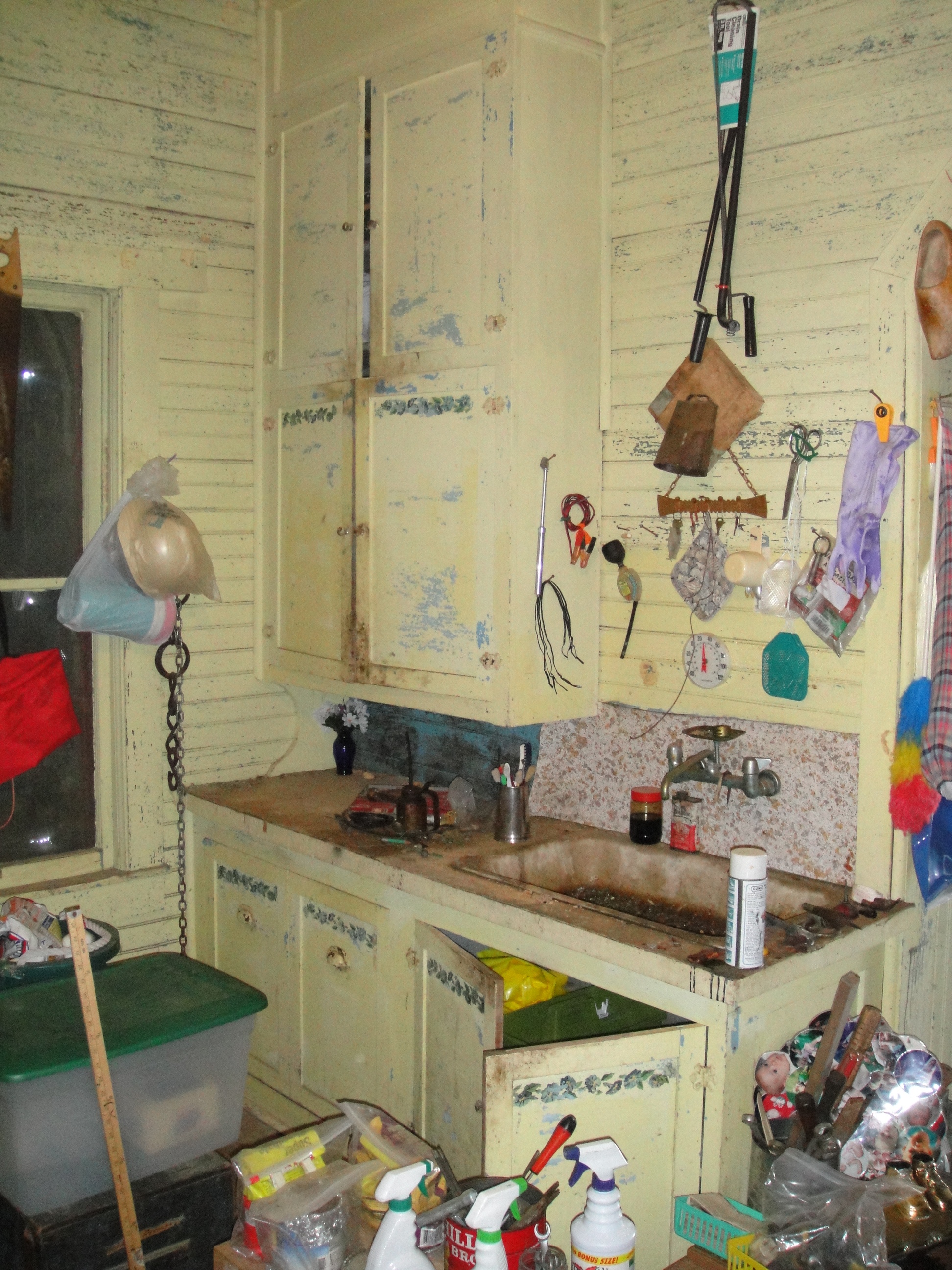
We had three piles: “storage unit”, “donate or give away”, and “trash”. Most of the “trash” pile we hoped to dispatch in the burn barrel right outside the back door. Time was wasting. I set a utility ladder at the base of a chippy kitchen cabinet and climbed to the top step as wasps glided through the room and occasionally bumped into the ten-foot ceiling precariously close to my head. I opened a grimy yellow door that almost reached to the top of the ceiling. It was filled with boxes. I pulled one from the top shelf. Empty. I pulled another, the same. I swept the whole shelf full of boxes to the floor. “Mamaw, we can burn these empty boxes, can’t we?”

The cabinet was almost as tall as the ceiling.

She returned to the room and surveyed the floor covered. “Oh, no.” she said. “Those go to my Christmas dishes and the person who gets them might want the original boxes.”

She returned to the front room. I scooped up the empties and and looked for one of the U-Haul boxes we purchased for this chore. I began to fill the big empty box with little empty boxes, the irony ringing in my brain like an irony bell. I sighed.

As I finished taping the box I thought to myself, At least it won’t be as heavy as a box of burned pillar candles. I walked into the front room, looking for a new challenge. In the far corner I saw a rat’s nest of corrugated brown boxes spilling out of an ancient cabinet.

Still more boxes...

I examined them closely. All empty, they each had a mailing label affixed with cancelled postage. None was large enough to hold more than a coffee mug or a shirt. It slowly dawned on me that this pile represented every Valentine, Mothers Day, Easter and birthday gift we had ever sent from Oklahoma to the farm. Twenty six year’s worth present and accounted for. Many of the gifts were long gone; worn out, misplaced, thrown away, re-gifted. I hadn’t seen the gifts themselves in years and couldn’t tell you what they were if you asked me, but here was hard evidence that they were shipped and received.

Lunch by the burn barrel.

The GWH and I were enjoying a sandwich at the picnic table under the pine trees. The burn barrel was aflame, licking merrily at the lower limbs of the walnut a few dozen feet away. We were dog-tired and filthy after only a half-day’s work of sorting and packing. Mamaw came out to join us with a can of diet Dr. Pepper in her hand.

“I’m looking for a big pile of boxes,” she said. “Have you seen them?”

I continued to chew my turkey and Swiss on wheat and gave her a quizzical look.

She continued,”They are small boxes, a whole bunch of them. I’ve been saving them. They were a good size.”

I took another bite as I considered this. A good size. We were attempting to cull through a 900 foot house that had been used as storage for nearly four decades. It needed to be empty by the end of Memorial Day weekend, three and a half days and counting. And our common understanding was everything either was going to be given away, trashed or what was kept needed to fit into a ten by fifteen storage unit. I hadn’t even seen the unit yet but I could tell by the storage pile we were running out of room. The pile nearly filled a sixteen by sixteen room and already contained a heavy box of large burned candles and a very large box of empty boxes.

I swallowed a gelatinous glob of wheat bread, turkey and cheese, then took a big swig of Sprite. I wiped my mouth with a paper towel and said, “If I see them, I’ll let you know.”

As she walked back to the house I glanced over my shoulder at the burn barrel, it’s flames subsiding and a fine white ash dancing on the breeze. I got up to poke the remains smoldering in the barrel. I thought to myself, smiling, Yes indeed. If they turn up I’ll definitely let you know.

Welcome to Arkansas, the Natural State.

“It would make a kick-ass deer camp.”

And with those words decades of neglect and inertia were whipped into a dust devil and swept out the door. Years of idle talk, daydreaming, half-baked ideas—it was put your money on the table time. I was terror-stricken.

“It’ll need to be a little more than a deer camp if you want my help.” I replied to the Great White Hunter.

My calm reply belied my sense of dread. I knew about renovation. The house we live in was once my grandmother’s, built in 1928. And although 1999 was a long time ago, it’s not quite long enough to erase the memories of a six month project turned into sixteen, contractors that would show up late, hung-over or not at all, the stem wall pour gone awry, the tile job that had to be ripped up 3 times before it was right, I could go on but you get the picture. And this was a house in town, on a paved street, near running water and utilities.

“How about a lake house without the lake?” I asked. As I made the proposal my stomach had the same simultaneously sick/exhilarated sensation as when I took a blind leap off the high dive as a kid.

“Yeah,” he said. “That could work.”

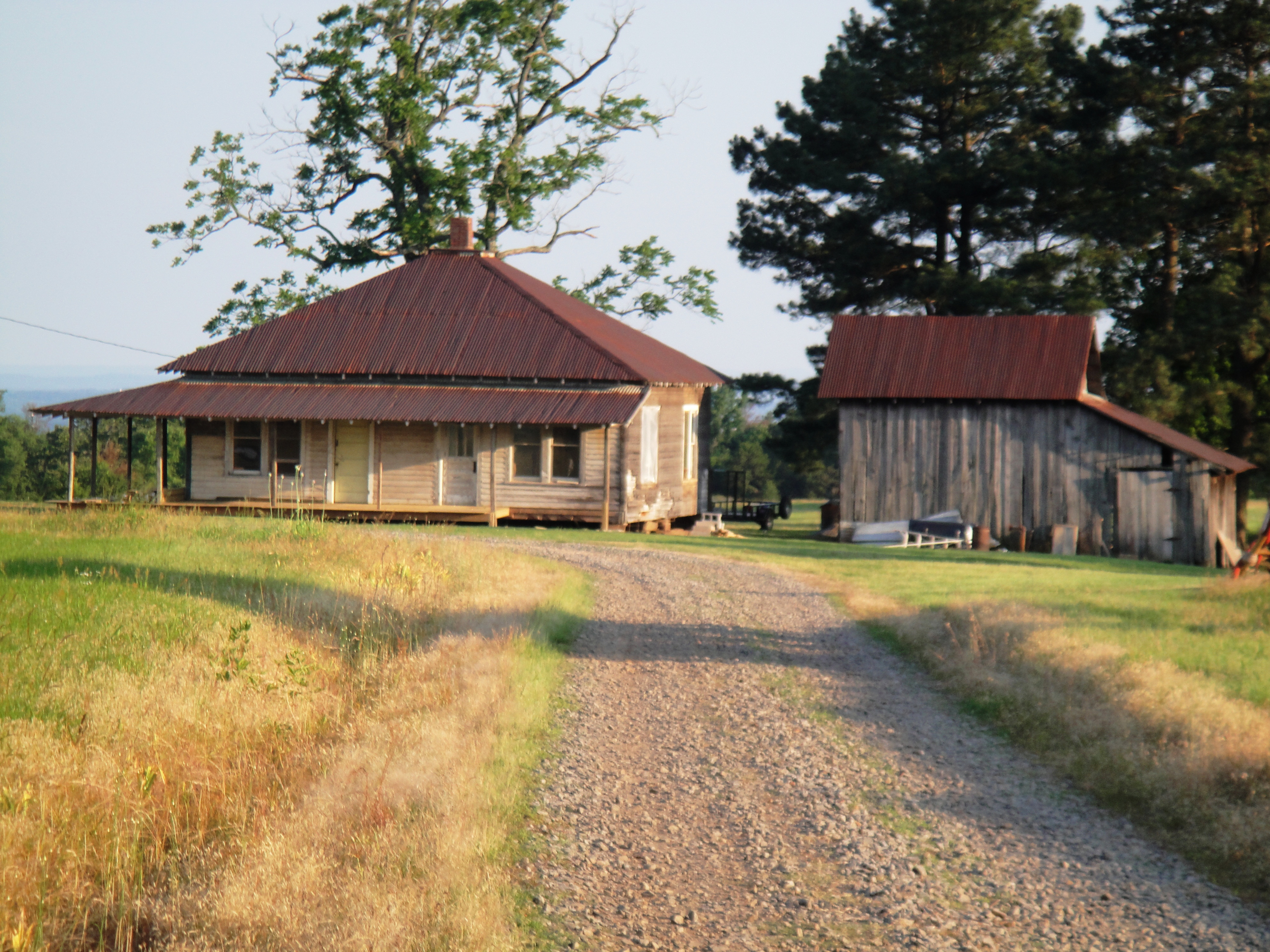
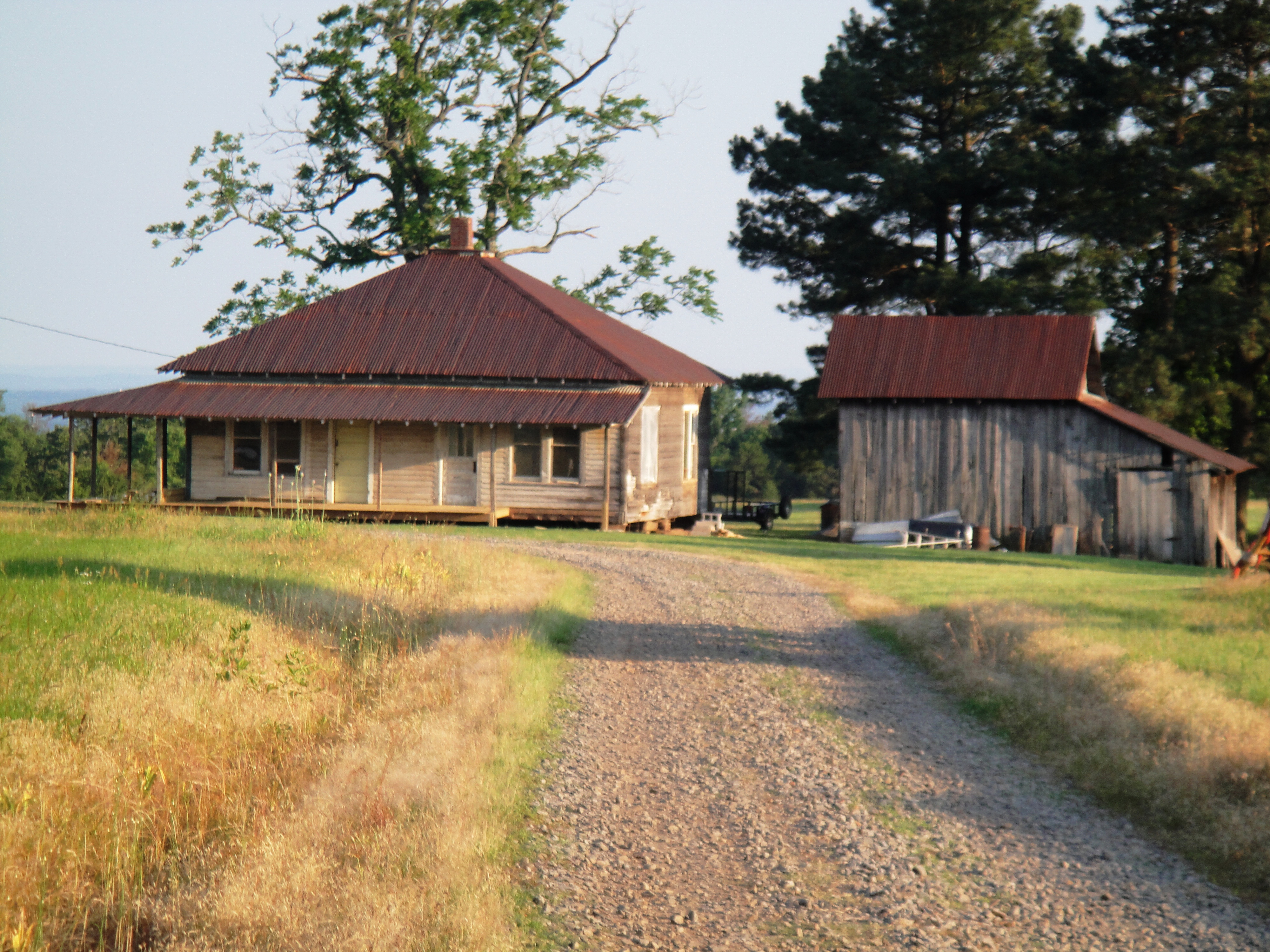
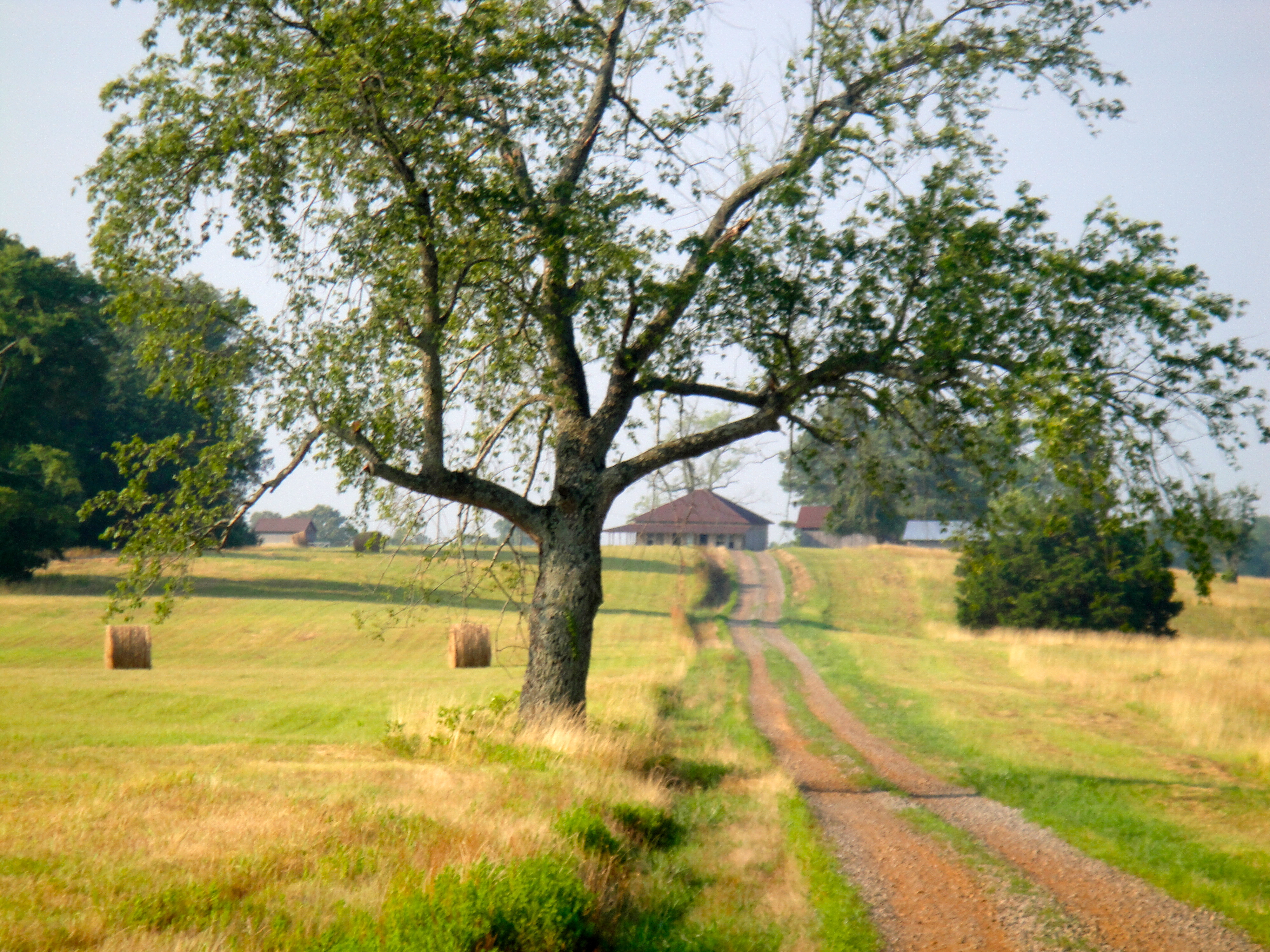
And so begins the saga of Jane Doe, a sturdy little under-appreciated farm house on a ridge in central Arkansas. Built at the turn of the last century, Jane has been uninhabited for at least 45 years. A white-framed square with a pyramidal tin roof and a wrap-around porch, her four rooms were once home to a widow and her six children. More recently she has been used as a make-do workshop and storage, or as I affectionately call it, a warehouse for crap.

You have to go far off the beaten path to get to Jane. At least a mile and a half from any paved road. Fifteen miles from the nearest city of any size. She sits smack in the middle of 900 beautiful acres. Our adventure begins in February, 2011. Hop on the back of the four-wheeler if your want to come along…

at the end of the dirt road